Showing posts with label Guided Reading Level N. Show all posts

Monday, July 12, 2010

Lightning Bolt Books - Famous Places Series

Research some of the most famous places in the United States - and then make it a point to visit them!

Bullard, Lisa.
The Redwood Forests.
March 2010.
Lerner Books.
Guided Reading Level: M
Review copy provided courtesy of publisher.


The redwood forests contain the world's tallest trees - evergreen trees. Located in Oregon and Northern California, visitors are drawn to the forests because of the factual information (being the tallest living things on Earth), the wildlife and flora within, and the atmosphere found within. In The Redwood Forests, readers will learn about all this, as well as how Redwoods grow and change from year to year.

The book is chuck full of information and contains beautiful photographs taken within the confines of the forests. Coupled with the photographs, the information is very relevant and likely easy for young readers to understand, as it is simple, yet to the point. I've been interested in visiting the Redwood Forests since I reviewed a fiction book about them back in April 2009. One day, I will make it there! Until then...

Learning/Reading Activities:
Piehl, Janet.
The Great Lakes.
March 2010.
Lerner Books.
Guided Reading Level: N
Review copy provided courtesy of publisher.


Formed millions of years ago from melting glaciers, the Great Lakes are located on the border of Canada and the north central United States. All of the Great Lakes are freshwater lakes, connected by a series of rivers, smaller lakes and canals. They are the world's largest group of freshwater lakes. In The Great Lakes, readers will learn details and facts about each of the five lakes that make up the Great Lakes. The book is complete with information about lake life, including the animals that live around the lakes, as well as details about how the Great Lakes have played a role in the history of the United States.

The book provides readers with a wealth of important information pertaining to the Great Lakes. The text is simple, yet detailed enough to paint an important picture and share necessary information. Coupled with the gorgeous photographs, readers will certainly be captivated when learning about the Great Lakes.

Learning/Reading Activity:
  • After reading, have your child(ren) complete an outline detailing important facts about each of the Great Lakes. Ask them to find three details from the book and then send them to Great Lakes Web Page for Kids to find an additional two bits of detail about each lake. The worksheet can be downloaded here.

If you're interested in finding out more information about any of the books reviewed or if you'd like to purchase the books, click the cover image for a link to Amazon.com. I am an Amazon Affiliate, so any purchases you make after clicking these images will result in my receiving a small percentage of the sale price!

Saturday, February 20, 2010

Slapdash Saturday - Black History Month Titles

I've had these titles hanging around for a while now, awaiting review. Black History Month seemed to be an appropriate time to feature these titles, so hopefully you'll find something you and your family can enjoy together!

Ingalls, Ann and Maryann Macdonald.
The Little Piano Girl: The Story of Mary Lou Williams, Jazz Legend.
January 2010.
Houghton Mifflin Books for Children.
Review copy provided courtesy of publisher.


Mary Lou Williams, an African American woman, taught herself to play organ at a very young age after listening to and then repeating the keys she'd heard her mother play. However, when the family had to move north to Philadelphia from Georgia when her step-father was seeking work during the war, Mary's family had to leave the organ behind... there just wasn't room to take it. Meeting much resistance as an African American girl in a new city, Mary felt left out with no friends. However, after being befriended by a lady from church, Lucille, Mary is once again in her element, drawing neighbors to Lucille's house where she can now play the piano, being deemed the "little piano girl." Mary eventually overcomes her hardships in life to go on to become a songwriter for Duke Ellington, Bennie Goodman, Charlie Parker and Dizzy Gillespie. She is also known for being one of the most powerful women in the history of jazz.

This is a very inspiring children that will hopefully enable children to see that they should search out their dreams... with persistence, determination and hard work, they too can accomplish what they wish!

Learning/Reading Activity:
  • Purchase or borrow from your local library some of Mary Lou Williams' favorite tunes. Listen to the CD with your children and perhaps even research if the songs have special meaning or if they were written based on true-life experiences.
  • The Zodiac Suite
  • My Mama Pinned a Rose on Me
  • Free Spirits
Golenbock, Peter.
Teammates.
March 2010.
Harcourt, Inc.
Guided Reading Level: N
Review copy provided courtesy of publisher.


Another wonderful work for Black History Month, Teammates, offers readers an outlook on a slightly less featured aspect of African Americans in history... their role in sports throughout the years. Here, readers will learn about Jacking Robinson becoming the first African American ball player to depart the Negro League and enter the Major League after being recruited by Brooklyn Dodgers' manager Branch Rickey.

Readers will likely be intrigued at learning all of the hardships and prejudices Robinson faced in his first year on the team. This book is a perfect read for Black History Month, as it discusses in some detail the prejudices that Jackie Robinson, a baseball hero, faced alongside other African Americans.

Learning/Reading Activity:
Hopkinson, Deborah.
First Family.
December 2009.
HarperCollins.
Review copy provided courtesy of publisher.


Just over a year ago, President Obama was sworn into office as the nation's first African American President. This was a huge feat for the African American population! In part due to the historical importance of this event, and in part due to the fact that this is the first time in many years that there have been young children in the White House, there seems to be an abundance of children's literature about the Obama family. This book give readers an insight into the life of this "historical" family - sharing their daily routines, as well as all that living in the White House provides for the family. The book is full of fun trivia and children will likely to be eager to learn about the White House and the First Family with this book!

Learning/Reading Activity:
  • Moving can be a hard experience for some children - leaving behind friends and family for the unknown. Malia and Sasha were encouraged to feel more comfortable in their White House home by being allowed to decorate their new bedrooms however they wanted. Here, you will find a game that will allow your child(ren) to "virtually" create a bedroom of his/her own (although it does seem to be a bit on the feminine side). The Sims 3, albeit a bit pricey is also another great game for such simulations - the whole family can enjoy this one!
  • The White House Garden is something else that has been in the news over the past year! Talk about the role of gardening in this family. What are the purposes and the importance of gardening to Michelle Obama and her family? Here, you will find a layout of the White House Garden and a blog entry with information about the garden.
  • The White House website is full of information and interesting photos that your family can enjoy!
Shange, Ntozake.
We Troubled the Waters.
October 2009.
HarperCollins.
Review copy provided courtesy of publisher.


I think this might just be one of the best poetry books that focuses on all aspects of Black History! The poems and artwork is so revealing of the emotions experienced by African Americans that it's almost scary. The poems would be wonderful to share one per day throughout February to open a daily discussion about African Americans were treated in history. I've opted to share a few that especially touched me!

WATER FOUNTAINS
it's lucky for them
they could read
"colored" & "white"
signified who could
drink water from where
they were a bit puzzled
it was just water
but it was against the law
to get confused & have the
white boy drink from the
colored or the colored drink from the white
a serious crime under Jim Crow
  • Discuss and describe the ways in which this poem and artwork could be considered ironic.
EAGER TO LEARN
bright eyes/books in hand
they simply want a place to learn
but who'll take two little negro girls
they're no danger/no threat
why threaten they right to learn
  • Talk about why the rights of negro children to learn were threatened when they were no threat to other children.
Reading/Learning Activities:
  • After reading and discussing the poems in this book, assign each child/student a different aspect of African American history. Ask each child to compile a poem and then illustrate the poem to accurately depict that even in Black History.


If you're interested in finding out more information about any of the books reviewed or if you'd like to purchase the books, click the cover image for a link to Amazon.com. I am an Amazon Affiliate, so any purchases you make after clicking these images will result in my receiving a small percentage of the sale price!

Wednesday, January 20, 2010

Quilting through History: Slavery and Freedom

My post earlier tonight focused on the role that quilting played in the lives of Pioneer women. Tonight, I'm focusing on another aspect of quilting in the history of the United States - Slavery and Freedom. Since both of the learning activities include making a quilt, perhaps you'll want to read both stories and then decide which would be the more appropriate activity for your child(ren) - if you're a teacher, option 2 might be better... if you're a parent, option 1 might work better! Either way, enjoy!

Hopkinson, Deborah.
Sweet Clara and the Freedom Quilt.
1993.
Alfred A. Knopf.
Guided Reading Level: S
Review copy borrowed from local library.


Little Clara is more fortunate than most slaves - at least, as fortunate as a slave child could possibly be. She's been given the opportunity to work inside the house, alongside Aunt Rachel to help sew for the upcoming wedding for the plantation owner's daughter. As she learns the stitches to sew, she also picks up on information in the house that allows her the opportunity to find a way to help other slaves. Using the scraps of fabric left over from her sewing projects, Clara sews a patchwork quilt that maps out the lay of the land, ultimately helping the plantation slaves escape North by means of the Underground Railroad... all they have to do is follow the fields, roads and other symbols on her Freedom Quilt.

This book is very informational and shows one way in which slaves used quilts to gain their freedom. Not only is the book full of quilting-related information, children will learn a great deal about the life of slaves as Clara works her way through the sewing of the quilt. This is highly recommended reading by me!

Learning/Reading Activity:
  • With your child(ren), create a "Freedom Quilt" of your own. Head out to your local dollar store and pick up a few packs of scrapbooking paper. Come up with a plan - where will you go to find freedom? (This could be as simple as going from the living room to the bedroom or barn... or as complex as heading from your house to the library). Whatever plan you come up with, work together to create the quilt using the various scrapbook papers. Be sure to include roads, fields, houses, etc., just as Clara did! Then, challenge other family members... will they be able to read the quilt to find freedom?
Stroud, Bettye.
The Patchwork Path: A Quilt Map to Freedom.
2005.
Candlewick Press.
Guided Reading Level: N
Review copy borrowed from local library.


In The Patchwork Path: A Quilt Map to Freedom, readers are introduced to Hannah, a young slave girl of ten, whose sister was sold off and whose mother passed away. Only Hannah and her father remain. However, Hannah's mother with always be with the pair, as when they choose to head north to Canada in search of freedom, they take along Mother's "Patchwork Path" quilt, using the symbols depicted to assist them in their travels along the Underground Railroad. Similar to Clara in Sweet Clara and the Freedom Quilt, here, another slave is sharing a different way in which quilts assisted them in finding freedom. Rather than being almost a physical map of the land as Clara's was, Hannah's quilt used symbols to tell the story of how to find her way north.

While the stories are very different in the way in which quilts were used, they are ultimately sharing the same goal - leading slaves to freedom! This was my first time reading this book, but it is truly wonderfully written and should be included, not only in a quilt-themed unit, but also in a unit focusing on slavery.

Learning/Reading Activity:
  • Create your a classroom "Patchwork Path" quilt that features symbols that are important to your life. Instructions can be found here.


If you're interested in finding out more information about any of the books reviewed or if you'd like to purchase the books, click the cover image for a link to Amazon.com. I am an Amazon Affiliate, so any purchases you make after clicking these images will result in my receiving a small percentage of the sale price!

Monday, January 4, 2010

Non-Fiction Monday: Introducing Snow!

Well, to start out your child with these snowy-themed reads, you'll likely want to give them the bit of important, true information they'll be needing to really appreciate snow for what it is. Today, I have a few non-fiction titles that you may wish to choose from to get started!

Martin, Jacqueline Briggs.
Snowflake Bentley.
December 28, 2009 (1998).
Houghton Mifflin Harcourt
Guided Reading Level: N

Review copy provided courtesy of publisher.

In this simple biography written specifically for children, Wilson Alwyn Bentley, also known as Snowflake Bentley, is introduced in a manner that is sure to have children hooked! The story is basic, yet detailed enough to allow children to know what they should know about Bentley - his life growing up on a typical Vermont farm, his love of snowflakes, and ultimately, his coming to be known as one of the greatest photographers of snowflakes in history. Coupled with Mary Azarian's typical woodcut illustrations, are snowflake borders on each page that present readers with detailed factual information about Wilson Alwyn Bentley and his work with snowflakes (how they are formed, symmetrical design, magnification when using a microscope, etc.).

Reading/Learning Activities:
  • Head outside on a snowy day, being sure to bundle up! With your child, collect a mitten-full of snowflakes. Sit together on the porch, sipping hot chocolate. Grab a magnifying glass and together, explore the snowflake. If a table is available (and dry), ask your child(ren) to draw the snowflake that he/she sees. Repeat this several times. Later, once you're back inside and warmed up, take the snowflake drawings, reread Snowflake Bentley and discuss what your child(ren) saw with what Bentley saw. Did he/she observe the same things that Bentley noticed of snowflakes?
Branley, Franklyn.
Snow is Falling (Let's-Read-and-Find-Out-About-Science).
1986.
HarperCollins Publishers.
Guided Reading Level: K

Review copy borrowed from local library.

In typical Franklyn Branley style, children are introduced to a (new) topic in a simple, yet fun manner that will have them eager to learn more. Intended for young children, here, they will learn all there is to know about the ways in which snow can help humans and animals. The book would also be perfect for children living in areas where snow is not part of the "winter" climate, as it allows them to experience the wonder of snow as it begins "falling." Overall, the book is very educational in a simple manner that children will easily connect to, making it the perfect candidate as an introduction to this snowy theme!

Reading/Learning Activities:
  • Download and print out the Snow is Falling Venn Diagram worksheet. If your child is familiar with the use of Venn diagrams, this should be a somewhat easy activity, as they are comparing and contrasting the ways in which snow is helpful to humans and animals. If not, this would be a perfect book to help introduce the useful organizational tool!
If you're interested in finding out more information about any of the books reviewed or if you'd like to purchase the books, click the cover image for a link to Amazon.com.

Wednesday, October 28, 2009

Statue of Liberty Dedication Day

On October 28, 1886, Frederic Auguste Bartholdi's famous sculpture, the statue of Liberty Enlightening the World, on Bedloe's Island at New York Harbor was dedicated. Groundbreaking for the structure was in April 1883. A sonnet by Emma Lazarus, inside the pedestal of the statue, contains the words: "Give me your tired, your poor, your huddled masses yearning to breathe free, the wretched refuse of your teeming shore. Send these, the homeless, tempest-tost to me, I lift my lamp beside the golden door!"
-The Teacher's Calendar, 2008-2009

Still today, many of the children attending public schools here in the United States come from families of parents who were immigrants or are immigrants themselves. Let's take a moment today to share a bit of literature to honor these children and the lives they are living, thanks to the freedoms found within the United States!

Stevens, Carla.
Lily and Miss Liberty.
1992.
Scholastic, Inc.
Guided Reading Level: N


Summary from Barnes & Noble:

A little girl makes crowns and sells them to help raise money for the pedestal needed for mounting France's gift of the Statue of Liberty to this country.

This book really goes to great detail to show the level of importance that the Statue of Liberty was and still is to immigrant families across the United States. While Lily's family doesn't quite feel the importance of sharing their money, they do allow Lily to set to work earning money that can be added to the funds to raise the pedestal. It's nice to see a child working for a good cause and this will enable children to see that they too, can make a difference!

Lesson Plans/Learning Activities:
Bunting, Eve.
A Picnic in October.
1999.
Houghton Mifflin Harcourt
Guided Reading Level: P


Summary from Barnes & Noble:

A boy finally comes to understand why his grandmother insists that the family come to Ellis Island each year to celebrate Lady Liberty's birthday.

This book is perfect to share with children this week, as the picnic celebrating Lady Liberty's birth takes place in this story during this same day! This book allows children to see the importance that Lady Liberty means to immigrants, while they themselves might not have firsthand experience is just how important she is to those who have traveled here from other countries. This book would also fit well into a unit centering on the topic of immigration!


Lewison, Wendy Cheyette.
L is for Liberty.
2003.
Penguin Group (USA).


Summary from Barnes & Noble:

For more than a century, the Statue of Liberty has stood proudly in New York Harbor, welcoming people from near and far. Perfect for reading together with a young child, L Is for Liberty uses simple language and bold illustrations to celebrate the statue, her history, and the freedom she stands for.

I like this book because it can be used throughout numerous grade levels with different activities catering to the abilities of students.
  • For the youngest of readers (PreK-1), this book will introduce the Statue of Liberty and will act as a starting point for introducing other symbols of American importance.
  • With middle-grade readers (2-4), this book could be the introduction to a writing project in which students reflect on the freedoms they have, as the Statue of Liberty is a symbols of freedom and new-life for immigrants who have and will be entering the USA for years to come. Have children create an alphabet book titled "L is for Liberty: The Liberties of ______" (their name). Each letter of the alphabet should reflect some activity they are free to participate in because of living in a liberated (free) country. For example,
    R is for Reading.
    Books aplenty!
    Fantasy, Science-Fiction, Historical Fiction, Mystery.
    I am free to read all genres because I live in the United States of America!
If you're interested in finding out more information about any of the books reviewed or if you'd like to purchase the books, click the cover image for a link to Amazon.com.

Tuesday, October 13, 2009

School Lunch Week

School Lunch Week, October 12-16 (the second full week of October), is observed to celebrate good nutrition and healthy, safe school lunches. For more information, visit www.schoolnutrition.org
-The Teacher's Calendar, 2008-2009

Kelley, True.
School Lunch.
2005.
Holiday House.
Guided Reading Level: N


Summary from Inside Jacket Cover:

What will the kids of Lincoln School do without their health-conscious lunch lady, Harriet? When she goes on a much-needed vacation, the principal hires cook after cook, each one more outrageous than the last, but none who can replace their beloved Harriet. The kids - and their principal - send postcards, letters, drawings, e-mail, and telegrams detailing the chefs' outlandish meals in hopes of convincing Harriet to return. But will this lunch lady leave her tropical paradise to save the day?

This funny story is sure to have kids laughing - and hopefully appreciating their lunchroom staff! It's a perfect read-aloud to celebrate School Lunch Week!

Lesson Plans/Learning Activities:
  • Many activities related to School Lunch Week can be found on the website mentioned above!
  • Involve them in planning an "All Star Lunch," using the worksheet that can be downloaded here. Your child(ren) will be creating a menu that consists of a healthy: main course, vegetable, fruit, dessert and beverage. They are also asked to come up with some form of exercise, as part of a healthy lifestyle also includes daily exercise. You may need to work with them on this, but if they do well and really plan an "All Star Lunch," show them that hard work pays off and actually make their lunch for them and do their exercise of choice alongside them!
If you're interested in finding out more information about any of the books reviewed or if you'd like to purchase the books, click the cover image for a link to Amazon.com.

Friday, September 25, 2009

First American Newspaper Published - 1690

On September 25, 1690, the first (and only) edition of Publick Occurrences Both Foreign and Domestick was published by Benjamin Harris, at the London-Coffee-House, Boston, MA. Authorities considered this the first newspaper published in the US offensive and ordered immediate suppression.
-The Teacher's Calendar, 2008-2009

I thought today, in remembrance of this first newspaper publishing, we'd take a look at a few books related to the topic!

Gibbons, Gail.
Deadline! From News to Newspaper.
1987.
HarperCollins Publishers.
Guided Reading Level: N


Summary from Barnes & Noble:

Examines the diverse behind-the-scenes activities of a typical working day at a small daily newspaper, from morning preparations for meeting the deadline to the moment the afternoon papers leave the presses.

This book is a wonderful source of information about the printing business. Children will quickly learn all there is to know about how a newspaper comes to fruition. Along the journey, they will discover the importance of time management as well as all the different rolls that involve people working together to get a job done. Cooperation is a big theme in this book!

Pilkey, Dav.
The Paperboy.
1996.
Orchard Books.
Guided Reading Level: J


Summary from Barnes & Noble:

A paperboy and his dog enjoy the quiet of the early morning as they go about their rounds.


I was a "paperboy" once... and let me just say that I know exactly how the paperboy feels as he must drag himself from the comforts of a warm bed to get out and deliver those early morning papers. I think what children will enjoy more than the anything here are the paintings enclosed within, for they may not be able to make a connection to the text. However, it is a wonderful book. I could see it being introduced to students during a career week when different career choices are examined!

If you're interested in finding out more information about any of the books reviewed or if you'd like to purchase the books, click the cover image for a link to Amazon.com.

Thursday, September 24, 2009

National Punctuation Day

Celebrated on September 24, National Punctuation Day is a celebration of the lowly comma, the correctly used quote and other proper uses of periods, semicolons and the every-mysterious ellipsis. Visit www.nationalpunctuationday.com for more information.
-The Teacher's Calendar, 2008-2009

From my own experience in the classroom as a substitute teacher, many children struggle with the correct use of punctuation on a near daily basis. As teachers, perhaps this means we need to find a new approach to the teaching of such content. Could children's literature be helpful in the correct usage of punctuation? Have any of you used children's literature to teach punctuation? Was it's use successful in teaching what you were hoping to accomplish?

Donohue, Moira Rose.
Alfie the Apostrophe.
2006.
Albert Whitman.
Guided Reading Level: N

Summary from Amazon:

Alfie and other quirky little figures represent the contestants in the punctuation-mark talent show: periods and hyphens, commas, asterisks, and parentheses. They all do their things, including telling jokes and riddles (question marks) and cheerleading (exclamation points). Alfie, who has butterflies about performing onstage, does magic tricks, turning two words into contractions and demonstrating the use of the possessive. He brings down the house and is declared the show's shining star. Fanciful cartoon drawings capture the whimsy of this original, instructional story. However, children may miss some of the laughs, and, indeed, the point of the grammar lesson, if they haven't already been introduced to punctuation marks.–Sally R. Dow, Ossining Public Library, NY (School Library Journal).


This is a great book to introduce the apostrophe! It shows "magic" happening as two words are combined into a new word - a contraction! Definitely a great book to use in a classroom, and even if not being used, it's a great "thought" for teachers who are looking to introduce contractions in a clever, creative way that will really help children remember what an apostrophe does.

Pulver, Robin.
Punctuation Takes a Vacation.
2003.
Holiday House, Inc.
Guided Reading Level: M


Summary from Barnes & Noble:

When all the punctuation marks in Mr. Wright's class decide to take a vacation, the students discover just how difficult life can be without them.

This is an AWESOME book! I so want to add this to my collection! The enthusiasm for punctuation in this book is evident... I can definitely see the book exciting students about writing and editing. I loved it so much, I created two activities to go along, one riddle and one editing activity for students, feel free to download!

Worksheets I Created to Pair with the Book:
Truss, Lynn.
Twenty-Odd Ducks: Why, Every Punctuation Mark Counts!
2008.
Penguin Group USA.


Summary from Barnes & Noble:

Commas and apostrophes aren't the only punctuation marks that can cause big trouble if they're put in the wrong place. Now, Truss and Timmons put hyphens, parentheses, quotation marks, periods, and more in the spotlight, showing how which marks you choose and where you put them can cause hilarious mix-ups.

So this book is really clever! It has the potential to really make children chuckle... however, it either has to be used during independent reading, so children can see the placement of punctuation and relate to the pictures to tell the difference between the sentences with different punctuation marks, or it has to be read aloud by a teacher who is very good at fluctuating his/her voice in order to ensure that the correct meaning is conveyed! Perhaps the best way to use this book in a classroom would be to "borrow" a few of the sentences and put them on the board to make a discussion about just how much punctuation has the ability to change the entire meaning of a sentence.

If you're interested in finding out more information about any of the books reviewed or if you'd like to purchase the books, click the cover image for a link to Amazon.com.

Friday, September 18, 2009

National Honey Month

To honor the US's 212,000 beekeepers and 2.41 million colonies of honeybees, which produce more than 200 million pounds of honey each year, we celebrate National Honey Month from September 1-30.
-The Teacher's Calendar, 2008-2009

While many teachers don't teach units on honeybees until the spring, September makes as good a time as any... and if you'd rather wait until spring, that's cool too, just keep these wonderful books in mind!

Rockwell, Anne.
Honey in a Hive.

2005.

HarperCollins Publishers.

Guided Reading Level: Q


Summary from Barnes & Noble:

In spring and summer, honeybees gather nectar to make into honey. These fascinating insects live and work together in complicated societies, complete with queen bees and workers. Read and find out about honeybees and their creation -- honey!

This is a very information book told in the form of a story - children are clearly learning a great deal from all that is contained in this book, but it won't feel to them as though it's actually "learning." They will likely be mesmerized by these interesting details and many more!
  • worker bees make about 400 long flights before they fall to the ground and dies of exhaustion
  • learning the dance of the worker bee to alert others of a field of nectar
  • the ultraviolet markings on flowers that lead honeybees to nectar
  • only one queen resides in each hive
This is definitely a book to use when teaching a thematic unit on honeybees!

Gibbons, Gail.
The Honey Makers.
1997.
Morrow Junior Books.
Guided Reading Level: O


Summary from Barnes & Noble:

How sweet it is. Thousands of bees visited more than one million flowers to gather the nectar that went into that one-pound jar of honey. Here's the buzz on how these remarkable insects work together to create this amazing food.

What I absolutely love about Gail Gibbons books is how informative they are! This one will not disappoint. It is chuck-full of scientific terms that are so important when teaching about honey and honeybees... One of my favorite parts of this book were the last two pages - A Beekeeper's Yearbook, which depicts the different stages of honeybees and honey making throughout the course of a year. However, there's so much to be learned on every spectrum of the honeybee... the dances, the anatomy, the beehives, the honey... there truly is something that will appeal to everyone when using this book!

Micucci, Charles.
The Life and Times of the Honeybee.
1995.
Ticknor & Fields Books for Young Readers.


Summary from Barnes & Noble:

This witty and informative salute to the honeybee uses clear, lively text and detailed full-color illustrations to present a wide range of interesting, and sometimes amusing, facts about the life cycle, work, and history of one of the world's most useful insects.

This is another wonderful resource when teaching children about honeybees and honey making! Like The Honey Makers, this is loaded with important, useful information. It is a bit more detailed, so you will have to take that into consideration when using this with children, as there may be a need to modify what's being used, depending on the child(ren) and their level. Definitely worth including in a unit though!

Lesson Plans/Learning Activities:
If you're interested in finding out more information about any of the books reviewed or if you'd like to purchase the books, click the cover image for a link to Amazon.com.

Thursday, September 3, 2009

Aliki's Birthday

As a teacher, I am always looking for reference/resource books to share with children surrounding a particular curriculum topic. When looking for non-fiction reading material, Aliki has always been one of my top-choice picks. I think with these reviews, you might just understand why!

Aliki.
My Five Senses.
1989 (1962).
HarperCollins Publishers.


Summary from Barnes & Noble:

Children love to explore. Each day brings new sights and sounds, new things to smell and taste and touch . Aliki's simple text and cheerful art in this enlarged edition introduce very young children to the wonder of the five senses and all they reveal about the world around us.

This book is ideal to use when introducing young children to the concept of their five senses and the way they are used. By giving concrete examples students will quickly pick up on their senses and will soon be telling you all the different ways in which they are using their own senses!

Lesson Plans/Reading Activities/Suggested Reading
Aliki.
My Visit to the Zoo.
1997.
HarperCollins Publishers.
Guided Reading Level: N


Summary from Barnes & Noble:

Imagine traveling from a lush tropical rain forest, to a deep and
mysterious canyon, to the wide-open African plains—all in one day! In this tour of a modern-day zoo, visitors get to see how animals really live. They’ll learn everything from what elephants like to roll around in after their baths to what’s being done to preserve wildlife.


This is a very resourceful book that would probably best be used with children before a trip to the zoo! Perhaps you could provide them with a checklist (from animals in the book) to see just how many they can find. See if the children can discover facts about these animals at the zoo that they didn't find in the book! There are all kinds of activities that could be done in collaboration with this book - definitely worth checking out!

Aliki.
Manners.
1990.
Greenwillow Books.
Guided Reading Level: L


Summary from Barnes & Noble:

Discusses manners and gives examples of good manners and bad manners.

Broken down into seven lessons about manner, hopefully this book will help you teach your child everything he/she needs to know to be a polite child! What I really like about this book is that it doesn't need to be read in its entirety in one reading. Breaking the different lessons apart and spending several days practicing each one will ensure that little ones understand what it takes to be polite! Definitely a great book (even as a resource) to help parents when teaching children manners.

Lesson Plans/Reading Activities/Suggested Reading:
If you're interested in finding out more information about any of the books reviewed or if you'd like to purchase the books, click the cover image for a link to Amazon.com.

Wednesday, September 2, 2009

National Piano Month

-The Teacher's Calendar, 2008-2009

Mills, Claudia.
Gus and Grandpa and the Piano Lesson.
2004.
Farrar, Straus and Giroux.
Guided Reading Level: K


Summary from Barnes & Noble:

For Gus, the longest half hour of the day is spent practicing the piano. Why can't he be outside, shooting hoops with Ryan Mason? Even more painful are the lessons: Mrs. Moore complains about Gus's squishy fingers. But most painful of all is the piano recital. Gus has to play a piece called "The Horse Race," and he's not sure he will remember it. As a child, Grandpa played the violin, so he knows exactly how Gus feels. Grandpa also knows about something Gus will love -- making music with others -- and once again he shows Gus the way in a story with pictures that "reflect the sunny warmth of loving connections passed across generations."

This is the second book I've read, but only the first I've reviewed from the "Grandpa and Gus" series... I don't think it's a very popular series, but I definitely think it should be! The series is absolutely perfect for young boys, showing them in the comfort zone (mostly!), enjoying doing the things boys love - fishing, playing basketball, riding bikes, riding trains, playing baseball... the list goes on... this book in particular, shows boys learning to adapt to an activity they're not entirely comfortable with (Gus playing the piano) by showing how relatives can sometimes help draw the connections to draw boys into different activities! The entire series is worth sharing if you have young boys at home!

Miller, William.
The Piano.
2000.
Lee & Low Books.
Guided Reading Level: N


Summary from Barnes & Noble:

Set in the deep South of the early 1900s, this is the story of an African-American girl who learns to play the piano from her white employer. In return, she shows the elderly woman the power of friendship and caring. Luminous oil paintings skillfully evoke the mood and the time.


This book is incredible - the story, it's definitely one worth sharing, as the friendship between a young African-American girl and her White employer develops over time. Together, the two work to assist each other - this would be a particularly wonderful story to share if you have a classroom and see that children of different races are not working well together. Perhaps after reading this together, children will see that they all have something to offer one another and cooperative learning will slowly find its way into the classroom!

If you're interested in finding out more information about any of the books reviewed or if you'd like to purchase the books, click the cover image for a link to Amazon.com.

Friday, August 28, 2009

Allen Say's Birthday

Allen Say, Asian American author, was born James Allen Koichi Moriwaki Seii, in Yokohama, Japan on August 28, 1937, to a Japanese American mother and a Korean father. His first children's book, The Boy of the Three-Year Nap, was published in 1972. Since then, he has authored nearly a dozen more books! I hope you enjoy these historical-fiction picture books as much as I do!

Say, Allen.
Home of the Brave.
2002.
Houghton Mifflin Harcourt.


Summary from Barnes & Noble:

In dreamlike sequences, a man symbolically confronts the trauma of his family’s incarceration in the Japanese internment camps during World War II. This infamous event is made emotionally clear through his meeting a group of children all with strange name tags pinned to their coats. The man feels the helplessness of the children. Finally, desperately he releases the name tags like birds into the air to find their way home with the hope for a time when Americans will be seen as one people—not judged, mistrusted, or segregated because of their individual heritage.

I know this book is supposed to be symbolic of the feelings of the children incarcerated during World War II, but aside from that, I just wasn't able to make a connection... if any of you have read and are familiar with this book, please share your thoughts with me... reason with me! Help me to understand - I think it has the potential of being a quality piece of literature to share with children, but I need help in making sense of it myself before being able to successfully share it with children.

Say, Allen.
Erika-San.
2009.
Houghton Mifflin Harcourt.


Summary from Barnes & Noble:

In her grandmother’s house there is one Japanese print of a small house with lighted windows. Even as a small girl, Erika loved that picture. It will pull her through childhood, across vast oceans and modern cities, then into towns—older, quieter places—she has only ever dreamed about. But Erika cannot truly know what she will find there, among the rocky seacoasts, the rice paddies, the circle of mountains, and the class of children. For Erika-san, can Japan be all that she has imagined?

Allen Say is really starting to grow on me as an author. At first, I didn't really understand his work, but now, I'm slowly discovering the deeper meaning to be found within each book. This particular piece does a wonderful job sharing different aspects of the Japanese culture - in particular, the quieter Japan, opposite of the busy Tokyo. While I'm not sure that young children will understand the message conveyed here - there is great satisfaction to be found if you pursue your dreams, as it is conveyed by means of a "love story" of sorts. I think girls will be most apt to enjoy this particular Say work, but that's not say that boys won't find it equally interesting, especially if they're interested in learning about Japan.

Say, Allen.
Kamishibai Man.
2005.
Houghton Mifflin Harcourt.
Guided Reading Level: N


Summary from Barnes & Noble:

The Kamishibai man used to ride his bicycle into town where he would tell stories to the children and sell them candy, but gradually, fewer and fewer children came running at the sound of his clappers. They were all watching their new televisions instead. Finally, only one boy remained, and he had no money for candy. Years later, the Kamishibai man and his wife made another batch of candy, and he pedaled into town to tell one more story—his own. When he comes out of the reverie of his memories, he looks around to see he is surrounded by familiar faces—the children he used to entertain have returned, all grown up and more eager than ever to listen to his delightful tales.

Now this is one Allen Say story that I would certainly want to add to my bookshelf! Not only does the story depict old-Japan vs. new-Japan, it shares with children a bit of their culture that should never have been forgotten - the Kamishibai, or picture storytelling. I could almost picture myself using this with say a 4th or 5th grade classroom - presenting each children with a different picture and assigning them to write a story about the picture. Using the writing process - drafting, editing, publishing, I would then create the wooden box theater that holds the picture and ask each child to be the Kamishibai Boy or Girl and share their story with the class. I think this would make for a really neat writing activity!

If you're interested in finding out more information about any of the books reviewed or if you'd like to purchase the books, click the cover image for a link to Amazon.com.

Thursday, August 27, 2009

Sarah Stewart's Birthday

Previous to starting up this blog, Sarah Stewart was an author I had never heard of before... and if I had heard any of her stories, well, the name didn't stick with me (that's a possibility)! However, she's got some great children's books out there that are definitely worth sharing!

Stewart, Sarah.
The Friend.
2004.
Farrar, Strauss and Giroux.
Guided Reading Level: N


Summary from Barnes & Noble:

Lucky for Belle, she has a friend at home, a caregiver named Beatrice Smith -- Bea -- who keeps a close eye on her so she doesn't get into too much mischief. Through the week Belle helps Bea as she does chores or shops or bakes, and at the end of most days they head to the beach -- Belle and Bea, hand in hand, by the sea. But one afternoon Belle sneaks outside to play all alone, and something happens that changes her life forever.

I love that each book written by Sarah Stewart holds such deep personal meaning and message. Not only will children love this cute story, but it would be a more than appropriate gift for the family babysitter or Nanny to express just how much you (and your children) appreciate the things that they do for your children out of the kindness of their own heart - welcoming your children as they'd welcome their own! Definitely should add this to a gift list!

Stewart, Sarah.
The Library.
1995.
Farrar, Strauss and Giroux
Guided Reading Level: K


Summary from Barnes & Noble:

Elizabeth Brown loves to read more than anything else, but when her collection of books grows and grows, she must make a change in her life.

Oh this is an amazing story! It will definitely appeal to children who love reading! I think the part that they will connect with the most is the dedication page...
To the memory of the real
Mary Elizabeth Brown
Librarian, Reader, Friend
1920-1991
If children are able to see that there are other people in the world (who have made a difference) and are just like them, they're more apt to be accepting of their love of reading. Personally, I think it's terrible that kids are teased because they love reading (yes, I was one of them, so I am speaking from experience). I've always believed reading=knowledge... and if this book will help further instill that hobby in children, all the more power to it!

If you're interested in finding out more information about any of the books reviewed or if you'd like to purchase the books, click the cover image for a link to Amazon.com.

Friday, August 21, 2009

Monarch Butterfly Fall Migration

August 21-November 7 (approximate). The monarch butterfly (Danaus plexippus) of North America begins an amazing migration of up to 3,000 miles in late August to escape the northern winter. Some 140 million insects travel to small forests in southern California (west of the Rocky Mountains) and Mexico (east of the Rockies, via central and coastal Texas) from as far as Minnesota and New England. In late spring, they will journey north again. Given that their lifespan is 4-6 weeks, the butterflies making the same annual migration are the grandchildren of the grandchildren of the butterflies that overwintered 10 months previously. For more information: www.monarchwatch.org and www.monarchlab.umn.edu
-The Teacher's Calendar, 2008-2009

Frost, Helen.
Gore, Leonid.
Monarch and Milkweed.
2008.
Atheneum Books for Young Readers.


Summary from Barnes & Noble:

Every spring the monarch butterfly migrates thousands of miles in search of the ideal milkweed plant. When she finds it, she lays her eggs on the plant, so when each egg hatches, the baby caterpillar can feed on the milkweed leaves. The milkweed plant then provides the perfect protection as the caterpillar turns into one of nature's wonders, a chrysalis, before transforming into an even greater wonder: a monarch butterfly. And once the newborn butterfly soars away, the milkweed seeds fly away on the wind and start this cycle over again.

I loved this story for several reasons:
  1. The illustrations immediately caught my eye... there was something about them that I'm not even sure how to describe - splatter paint maybe... or some kind of texture printing? Whatever the medium used, it worked! Definitely an eye catcher!
  2. The book is a wonderful resource in any plant or butterfly unit because together, we see how the plants (milkweed) and the butterflies (monarchs) rely on each other to complete the "circle of life."
  3. The author's note at the end of the book describes in kid-friendly terminology (while not entirely kid-friendly as far as reading comprehension goes)the monarch migration that takes place each fall and spring. I think kids will be amazed to learn that the butterflies that migrate south in the fall are the great, great grandparents of the ones that make the return journey north come spring!
Definitely worth reading and sharing - if not for educational purposes, for pleasure!

Johnston, Tony.
Isabel's House of Butterflies.
2003.
Sierra Club Books for Children.


Summary from Barnes & Noble:

Outside her home in Michoacan, Mexico, grows eight-year-old Isabel's greatest treasure: an oyamel tree. Here, every autumn, a miracle happens-for Isabel's tree is the wintering place for thousands upon thousands of monarch butterflies that migrate from the north. When they flutter down to roost, they transform Isabel's tree into La casa de las mariposas-The House of Butterflies. But this wonder is in danger of disappearing forever. Isabel's family is poor, and it is a cruel, dry year for Papa's meager crop of corn and beans. Soon, chopping down the tree to sell its wood may be the family's only hope for survival. What will happen to the butterflies then?

I really enjoyed reading this and was intrigued by the different way of life that is depicted throughout the entire story. We (and children) will see just how different like if for different people throughout the world and their ways of handling the hardships that they're up against versus how we do. Isabel takes pleasure in knowing that the butterflies will return year after year... But, just as the summary states, "What will happen to the butterflies then?" Readers never really find out what happens... does the family have to cut down the precious oyamel tree? Or does Isabel's plan help the family survive without having to chop down their precious butterfly tree? I was a bit disappointed that we didn't see an ending... perhaps the story was meant to end like this to allow readers the opportunity to dream up their own ending...

O'Flatharta, Antoine.
Hurry and the Monarch.
2005.
Alfred A. Knopf.
Guided Reading Level: N

Summary from Barnes & Noble:

When the beautiful orange Monarch on her fall migration route from Canada to Mexico stops to rest at Wichita Falls, Texas, she makes friends with an old tortoise called Hurry. She tells him, "Maybe one day you'll break out of that shell, grow wings, and fly away," and then she is off again with millions of other Monarchs. In the spring, she stops again at Hurry's garden just long enough to lay her eggs and head north to Canada. Embedded in this lyrical and tender fictional presentation are the fascinating facts about the amazing 2,000-mile migration and the life cycle of butterflies.

I loved the message (I found to be) portrayed in the book - the world is full of places waiting to be seen! I think that one phrase in particular makes this book appropriate for not only young children learning about the life cycle and migration of the monarch butterfly, but also appropriate for graduating seniors (high school or college).
"What's your hurry?" asks Hurry.
"I'm off to see the world. What do you think it's like?" asks the butterfly.
"I imagine - " says Hurry slowly,
"I imagine that it's like my garden.
A place full of astonishing things."
"I can't wait," says the young
monarch, flying away.
The message here shows that it's okay to be comfortable in your own "shell," so to speak... that as long as you're content with the life your living, that's what really matters - but if you do wish to set off into the world and see other ways of life, that's okay, too!

Either way - however you choose to look at this book, educationally or as a motivational gift, it's definitely worth adding to your TBR pile!

Lesson Plans/Learning Activities:
If you're interested in finding out more information about any of the books reviewed or if you'd like to purchase the books, click the cover image for a link to Amazon.com.

Wednesday, July 22, 2009

Curious Wednesday... Meets Curious George!

Curious Wednesday!
Who's curious about Curious George?!?!

Rey, Margret and H.A.
Curious George and the Firefighters.
2009 (2004).
Houghton Mifflin Company.
Guided Reading Level: J


Summary from Barnes & Noble:

George and the man with the yellow hat take a trip to the firehouse where George finds all sorts of new things to explore. When one curious monkey meets a company of unsuspecting firefighters, a big adventure is sure to follow.

This is an oldie that's been reprinted! I still have a huge collection of Curious George books from when I was a child and still, to this day, share them with children. The trip to the firestation that Curious George and the man with the Yellow Hat take make this book perfect for a read-aloud before a classroom visit to the local firestation. It will allow readers the opportunity to learn about the things they will see and experience on such a field trip! The book would also make a great read-aloud if children are learning about different career fields as a part of Career Day!

Rey, Margaret and H.A.
Curious Baby: Counting (Curious George).
2009.
Houghton Mifflin Company.


Summary from Barnes & Noble:

Babies will enjoy learning to recognize the adorable farm animals in this board book with wooden beads. Five beads embedded into the book function as a rattle and later as a tool for helping readers count the farm animals along with George. Beautiful patterns and a reasonable price help make this an ideal choice for gift baskets.

I love this new Curious George series! Not only are the books perfect for babies, but they also have the appeal that will allow children to become "hooked" on Curious George for years to come. The very basic concepts are perfect for babies and these will likely appear in future baby gifts that I pass out!


Malamud, Rachel.
Curious George 2: Follow that Monkey.
2010.
Houghton Mifflin Company.


Summary from Barnes & Noble:

One of the most memorable and charismatic characters in children’s literature, Curious George was the creation of the talented husband-and-wife team H. A. and Margret Rey, who fled Nazi Germany for America. Their lovable monkey (and his mischievous exploits) have entertained several generations of readers.


I was not familiar with this new "Curious George 2" series... after reading, I've come to the conclusion that the 2 must come from the television series? Anyone have any ideas about this? The story itself was cute, but the animated-style illustrations left me longing for the tradition H.A. Rey-type Curious George works... to me, it just wasn't the same. However, children may like these more because of the added color that catches the eye...

Rey, H.A.
Curious George Learns the Alphabet.
2009.
Houghton Mifflin Company.
Guided Reading Level: N


Summary from Barnes & Noble:

Readers learn the alphabet along with George as the man in the yellow hat teaches the curious monkey how to read.


The difference between the edition pictured and the edition that I received in the mail is the cassette tape. The volume released in earlier this summer in June comes with a CD recording of the book, with and without page turning prompts. I love books with cassettes and/or CDs because they allow more freedom to children who have not quite mastered reading, allowing them a sense of independence and freedom for their reading pleasures. This book not only would be great for teaching children the alphabet, but also beginning sounds, and, with older children nouns vs. proper nouns, as each letter is taught as both capital and lower case. However, not all of the capital letters should really be depicted with a capital, as they are not necessarily propper nouns! Over all though, I'm definitely glad to be adding this to my Curious George library!

Rey, H.A.
My Adventures with Curious George: A Build-Your-Own-Book Kit.
2009.
Houghton Mifflin Company.


Summary from Barnes & Noble:

Children will have fun being author and illustrator as they join Curious George to create their very own adventure! Younger kids can use storyline stickers to get their imaginations rolling, while older children may prefer to use headline stickers or create their own themes.
The boxed activity kit includes:
* A hardcover, jacketed book...with die-cut to include your photo
* Over 200 stickers
* A CD of 200 images of Curious George artwork children can print
* Bookmarks and bookplates
* Fill-in About the Author pages
* A Writer's Notebook
* Customizable life-the-flaps
* A note to parents


This book would be perfect for children who are Curious George fans! This would allow children to see that writing can be fun - they can build a Curious George adventure of their own! I love the concept... it's a book in itself that allows children the opportunity to use their imagination and see where their dreams are capable of taking them! A must have for Curious George fans!

If you're interested in finding out more information about any of the books reviewed or if you'd like to purchase the books, click the cover image for a link to Amazon.com.

Monday, July 13, 2009

Non-Fiction Monday: National Ice Cream Month

First designated by President Ronald Reagan in 1984, July 1-31 celebrates ice cream as a fun and nutritious food that is enjoyed by a full 90 percent of the nation's population.
The Teacher's Calendar, 2008-2009
There are loads of ice cream related children's books on the market... today after reading more than a dozen, I've settled on these three non-fiction titles (after all, it is Non-Fiction Monday!) to share with you. If you're looking for more titles, fiction or non-fiction, drop a comment or an email my way and I'll gladly give you my list!

Greenstein, Elaine.
Ice-Cream Cones for Sale!
2003.
Scholastic, Inc.
Guided Reading Level: M


Summary from Barnes & Noble:

Who invented the ice cream cone? Ernst Hamwi, a wafflemaker at the 1904 St. Louis World's Fair, claimed it was his idea. But Arnold Fornachou said his cones inspired Ernst's! David Avayou reported that he brought the cone back from Paris. And Charles Menches announced that his sweetheart created the dessert. Only one man holds the patent for the first cone-making machine, though, and his claims top them all...In this picture book, Elaine Greenstein shows young readers that history is made by ordinary dreamers -- and it can be just as cool and delicious as a fresh cold ice cream cone.


This is a non-fiction book that's sure to appeal to children - as 99% of kids love ice cream! Greenstein walks readers through the patenting of the ice cream cone and the search for who the credit belongs to. A wealth of information is provided for readers... I enjoyed it because it's a summery treat we love eating and it's interesting to find out where the idea of ice cream cones came from!

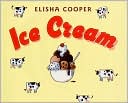
Cooper, Elisha.
Ice Cream.
2002.
HarperCollins Publishers.
Guided Reading Level: N


Summary from Barnes & Noble:

What some call a process, this observant author-artist calls pure poetry. And readers of all ages will, too, when they read and see (and almost taste!) Ice Cream—a picture book about how ice cream is made. It begins with the cow…and it takes farmers and milking machines, scientists and recipes, mixing thanks and giant freezers, even special ice cream tasters. But it all comes together in a symphony of sweetness…and don't forget the satisfied stomachs! Hooray for Elisha Cooper—and long may he wonder about, and observe and sketch, the world around us. Also includes a glossary of terms.

This book really walks readers step-by-step through the making of ice cream... from cow to ice cream delivery. I like how informative the book is, but I think it would be best used with older elementary children, perhaps ages 9+ because of the length and detail involved. Definitely worth sharing in the summertime when children are showing an interest in ice cream. I think this would be a good book to share after making homemade ice cream with children to show them how different the two processes are!

Gibbons, Gail.
Ice Cream: The Full Scoop.
2006.
Holiday House.


Summary from Barnes & Noble:

Everybody screams for ice cream! And it certainly has come a long way from its humble beginnings as a mere snow, milk, and rice mixture. Gail Gibbons explains the many firsts in ice cream history, from the first ice cream crank to the first waffle cone, as well as interesting facts about the tasty dessert, including how ice cream is made and how it gets to your home.


Like Gail Gibbons other works, this book appealed to me because of the variety of ways in which it can be used - for a simple story, read the bigger text at the bottom of the page that flows as a story. For children who are showing more of an interest in the little details that are involved in the making of ice cream, Gibbons has once again added in the details throughout the illustrations. This book provides so much information, it's definitely worth sharing!

If you're interested in finding out more information about any of the books reviewed or if you'd like to purchase the books, click the cover image for a link to Amazon.com.