Showing posts with label Wildlife. Show all posts

Monday, May 18, 2009

Non-Fiction Monday!

I've had both of these books sitting around for some time now, waiting for a non-fiction Monday review... however, they've all passed me by until today!

Woods, Michael and Mary B.
Seven Natural Wonders of North America.
2009.
Lerner Publishing, Inc.


This book is a great resource for middle-grade children doing research projects about one of the Seven Natural Wonders of North America of for teachers of youngers students to use as a read aloud when focusing on one of the seven natural wonders.

There is much to be learned about each of the Seven Natural Wonders of North America:
  1. Dinosaur Provincial Park in Alberta, Canada
    Readers find out about:
    • ancient reptiles
    • dinosaur boneyard
    • sedimentary rock where bones are encased
    • paleontologists finds
    • preserving this natural wonder
    • what a visit to Dinosaur Provincial Park might consist of
  2. The Grand Canyon in Arizona
    It's gorgeous to see and almost as fun to learn about:
    • What makes the Grand Canyon Grand?
    • How was the Canyon carved?
    • The Canyon is a "storybook" of the Earth's history
    • Various groups who have resided in the Canyon
    • Worries about this natural wonder
    • What/How to explore during a visit to Grand Canyon National Park
  3. Niagara Falls in Ontario, Canada and New York
    Also known as the "Honeymoon Capital," readers of all ages will enjoy discovering Niagara Falls:
    • learn about the natural history - dating back to the Ice Age
    • the importance of location in its popularity (only 2 1/2 hours from me!)
    • tightrope walking and barrel dropping stunts
    • the source of power that the falls provide
    • positive/negative of the falls
    • visitors attractions/activities
  4. Pacific Rim National Park in British Columbia, Canada
    Readers can learn about:
    • dangers faced by ships trying to cross the rim
    • rescue and hiking trails built by the government
    • the rain forest located within the park, as well as lakes, rivers, beaches, forests, meadows, mountains and valleys
    • the Broken Group Islands, a part of the park
    • what is/can be done to preserve Pacific Rim National Park
  5. Paricutin Volcano in Michoacan, Mexico
    Learning about Volcanos:
    • What happens when a volcano erupts?
    • Destruction caused by volcanos
    • Volcanos as a tourist attraction
    • What makes a volcano erupt?
    • What is Volcano Country?
    • Settlers in/around Paricutin
  6. Redwood Forests in Oregon and Northern California
    Children will love learning about:
    • the age of redwood trees
    • the ability of redwood trees to withstand very high winds
    • the home for plants and animals within these trees
    • the various uses of wood provided by the redwood trees
    • what is being done to protect the Redwood Forests
    *** Couple this section of the book with Jason Chin's Redwoods for a well-rounded lesson on the Redwood Forest!
  7. Yellowstone National Park in Wyoming, Montana, and Idaho
    Exploring Yellowstone (through literature):
    • Where did the name "Yellowstone" come from?
    • Wonders within this Natural Wonder - Old Faithful, Giant, Giantess
    • Wildlife located within the Park
    • Protecting this tourist attraction
As you can see, there's a great deal that children will learn when browsing this book. It's not only great for children though... if you're a traveler, why not try and visit all of the Seven Natural Wonders of North America and create a scrapbook of your travels? Heck, this book even encourages readers to "Choose an Eighth Wonder" after reading and/or visiting the first seven!
Now that you've read about the seven natural wonders of North America, do a little research to choose an eighth wonder. You may enjoy working with a friend.

To do your research, look at some of the websites and books listed on pages 76 and 77. Look for places in North America that:
  • are especially large
  • are exceptionally beautiful
  • were unknown to foreigners for many centuries
  • are unlike any other place on earth
You might even try gathering phots and writing your own chapter on the eighth wonder!
How cool of a project would that be for older children, perhaps in the 4th-12th grades?!?!

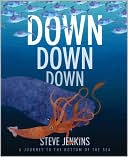
Jenkins, Steve.
Down, Down, Down: A Journey to the Bottom of the Sea.
2009.
Houghton Mifflin Harcourt.


Steve Jenkins does not disappoint in his latest non-fiction children's work! Readers are given a brief introduction about the ocean before setting sail on a virtual submarine of sorts, exploring the ocean to its greatest depths, The Marianas Trench, located 35,838 feet below the surface.
Oceans cover more than two-thirds of the globe's surface and well over half the planet lies beneath water more than a mile (1 1/2 kilometers) deep. We have explored only a small fraction of the oceans. In fact, more humans have walked on the moon than have visited the deepest spot in the sea.
This book is perfect for any child who loves the ocean and sea-life. It is very factual and will provide children with the chance to test your knowledge of ocean life!

If you're interested in finding out more information about any of the books reviewed or if you'd like to purchase the books, click the cover image for a link to Amazon.com.

Monday, April 20, 2009

National Wildlife Week

For those of you unfamiliar with Sylvan Dell Publishing, they feature science and math through literature. Previous to be introduced to them through my friend Amanda, of A Patchwork of Books, I was not at all familiar with them. However, they have quickly become quite possibly, one of my favorite publishers. The books they publish are of tremendous quality, have great educational purposes. Science and math content, character education qualities, and life lessons are taught in virtually all of the books I have seen so far. In addition to all of this, Sylvan Dell also puts out Teaching Activities to be used with all of the books - and they're available to everyone (you don't even have to purchase the books, but can simply borrow from a local library and share with your children/students) on their website.

This week is National Wildlife Week, and because of their great focus on science and wildlife, all of the books that I have reviews for today are from Sylvan Dell Publishing - four older books and three from the Spring 2009 line. I hope you find them as enjoyable as I (and the students I shared them with) did.
In 1938 the National Wildlife Federation created National Wildlife Week, a celebration to alert the public to the needs of wildlife and NWF's efforts to preserve wildlife and their habitats. NWF educates students, families and adults about wildlife conservation issues and encourages them to be environmental stewards. -The Teacher's Calendar
4 mini-reviews from previous years!

Pierce, Terry.
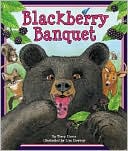
Blackberry Banquet.
2008.
Sylvan Dell Publishing.

The lone blackberry bush in a forest doesn't remain lonely for long! Before you can say blackberry all of the forest wildlife is in on the snacking pleasures - a mouse, a bluebird, a squirrel, a fox, a deer. They're all sharing nicely and pretty much sticking to themselves, until a bear comes along! The bear sets off a string of dominoes...
Bear scares Deer! Deer frightens Fox! Fox shocks Squirrel! Squirrel bumps Bird! Bird muddles Mouse! Mouse flings berries!
And now, the lone blackberry bush is lonely again... and bare of all it's berries. Along with showing the relationship of how plants are the root of all food webs, this would be a good introduction about how animals feed off each other.

Check out the following resources from Sylvan Dell to make the most of this book as a learning experience:
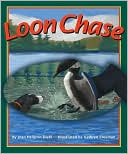
Diehl, Jean Heilprin.
Loon Chase.
2006.
Sylvan Dell Publishing.

This book is very informative about loons, while at the same time telling a story that will keep the attention of children. A young boy and his mom are out kayaking to collect berries for a pie. Their dog paddles alongside the kayak... until he spots the endangered loons and decides they'd make for a good snack. However, we learn quickly that the loon has defense mechanisms of its own, though and is able to rescue itself... at least from this dog!

Check out the following resources from Sylvan Dell to make the most of this book as a learning experience:

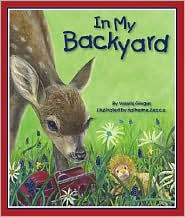
Giogas, Valarie.
In My Backyard.
2007.
Sylvan Dell Publishing.


If you're trying to teach your little one numbers and one-to-one correspondence, this is the book for you... especially if they love the outdoors and wildlife! The book explores numbers through use of daily baby wildlife that one might find in their own backyard (especially if you live in the country)! Deer, squirrels, grasshoppers, skunks, and raccoon babies are just a few of the wildlife animals used in showing a relationship between numbers and quantity.

Check out the following resources from Sylvan Dell to make the most of this book as a learning experience:

Kurtz, Kevin.
A Day in the Salt Marsh.
2007.
Sylvan Dell Publishing.

This book would be perfect to use as a time-telling practice activity. Readers visit the the salt marsh every hour, on the hour, from 8:00am to 6:00pm one day, showing all of the different changes that take place through the day teaching children a lot about the salt marsh... you might want to introduce exactly what a salt marsh is before reading though!
It's eleven o'clock in the salt marsh;
the tide is getting high.
Over in the tidal creek,
a blue crab skitters by.

The blue crab isn't picky
and will eat 'most any dish.
It even eats sea cucumber
or a stinky piece of fish.
This book would work perfectly to have children use a small clock and show you the time as you read about it. A great reinforcement/assessment activity when teaching about telling time!

Check out the following resources from Sylvan Dell to make the most of this book as a learning experience:

And the newest titles from the Spring 2009 line-up!!! I had a chance to share one of these with some 1st graders... the book was a huge hit!

Ring, Susan.
Where Should Turtle Be?
2009.
Sylvan Dell Publishing.

Little turtle is finally free! He's hatched from his egg and is now determined to explore the world around him. However, his new-found freedom eventually results in turtle getting lost and because he's so little, he doesn't even know where he belongs! As turtle explores his surroundings, the wildlife around him makes suggestions as to what he is and where he belongs. He gives each a try, but eventually moves, finding it not for him. Eventually he figures out that he's a sea turtle.

I would think this story would open the door for discussion that one shouldn't give up in the world, as there's always a place for everyone, sometimes you just have to look a little harder to find out where you really belong!

Check out the following resources from Sylvan Dell to make the most of this book as a learning experience:
Love, Donna
Henry the Impatient Heron.
2009.
Sylvan Dell Publishing.

Henry is a very impatient heron, as the title might alert you to! He's unable to stand still... for anything! Everyone in is family is upset with him because of his inability to stop moving long enough. One day, after being separated from his family and coming to the realization that he has to figure out how to get food for himself (an impossible task for an impatient heron), Henry enlists the help of The King. The King teaches Henry what to do - to look like a stick. Under water, a heron's legs looks like a stick and everyone knows that fish aren't afraid of sticks but are definitely afraid of herons. In the end, Henry's hard work and efforts pay off and he's able to catch a large fish.

I had to opportunity to share this book with a group of 1st graders and they absolutely loved this... enough that they wanted to hear the story a second time! They loved the illustrations - the favorite in the class was when Henry's bill hit the bank when he was trying to catch a salamander. The kids also loved the page when Henry turned himself into a stick (one of them had actually guessed this was how he was going to catch a fish)!

The story teaches children that hard work and effort pays off in the long run. I could see myself using this story to teach children about patience, as that is an important aspect of everyday life that children need to have a concept of (any teacher or parent knows that children need to have patience as we can only do so much at a time)!

Check out the following resources from Sylvan Dell to make the most of this book as a learning experience:

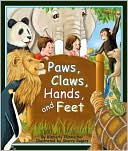
Hutmacher, Kimberly.
Paws, Claws, Hands and Feet.
2009.
Sylvan Dell Publishing.


Along with Henry the Impatient Heron, I also had a chance to share this book with the same group of 1st graders. They enjoyed this book, but they still deemed Henry the Impatient Heron their favorite. However, this was by far my favorite! It was the realization drawn from the ending that made me love the book so much! I'm not going to give away the ending, but I am going to urge you to head out to the local library and borrow a copy or just click on the image and head to Amazon.com and order a copy for yourself today!

Two young children set off on an adventure with all kinds of wildlife - monkeys, spiders, lions, elephants and more! Waking, shaking, feel the beat, paws, claws, hands, and feet... The illustrations take readers to the habitat of each of these wildlife animals, and allows for readers' imaginations to go wild!

Check out the following resources from Sylvan Dell to make the most of this book as a learning experience:

If you're interested in finding out more information about any of the books reviewed or if you'd like to purchase the books, click the cover image for a link to Amazon.com.