Showing posts with label Writing Prompts. Show all posts

Wednesday, October 14, 2009

Wacky Wednesday

Today's post was supposed to feature books in recognition of National Roller Skating Month. However, I wasn't able to get my hands on any of the books that I was hoping to... so, it's going to be Wacky Wednesday instead - a mixed bag, all appropriate for the season. Hopefully you can enjoy them as much as you would have had they been related to roller skating!
-The Teacher's Calendar, 2008-2009

Falwell, Cathryn.
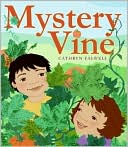
Mystery Vine.
August 25, 2009.
HarperCollins.
Source: Review Copy Provided from Publisher


Summary from Barnes & Noble:

As the seasons go by, the mystery vine grows and grows and grows. Now, finally, it is autumn, and the mystery vine is no longer a mystery. Hello, pumpkins! This is the season for jack-o'-lanterns, pumpkin pie, pumpkin bread, and pumpkin seeds—ready for toasting and munching, and for saving and planting come spring.

This cute rhyming book is more than appropriate for this time of the year! The two children watching the mystery vine will easily encourage other young readers to guess what the vine is... it'll be even more fun to use as a read-aloud or in the classroom if you don't show children the cover (they might spot the tiny pumpkin that dots the "i"). I'm definitely glad to add this to my bookshelf for fall books (believe it or not, I don't have many fall books, but rather tons of Halloween ones).

Lesson Plans/Reading Activities/Additional Suggested Reading Materials:
Brallier, Jess.
Tess's Tree.
August 2009.
HarperCollins.
Source: Review Copy Provided by Publisher.


Summary from Barnes & Noble:

Tess loved her tree. She liked to swing on it and sit in its shade and catch its leaves in the fall. When Tess's tree has to come down, Tess is very sad . . . until she finds a way to gather friends and family and celebrate her tree's remarkable life. This is a book for sharing with people you love, among good friends, or on a quiet day under a favorite tree.


I was so excited the day this book arrived... I had been waiting for it and earlier in the day (on the same day it arrived), I had been substitute teaching in a computer lab for K-6 students. The kids were having free computer time, but were restricted to links provided on the school district website. Didn't one of the second grade girls find this book available to read online (you can find it here)? I was thrilled to see that some of the books are available for kids free of charge! While I still prefer to read a book from an actual book, if it takes books online to get kids to read, I guess I'll learn to deal with that!

This is an incredible book... one that I would recommend for children going through a loss. The book shows that it's okay to mourn, but that it's also good to celebrate the life that was (and will always be remembered)! However, this book isn't limited to just sharing with children experiencing a loss - it makes for a great read-aloud for families, as it's tender and moving... definitely love this one!

Learning Activities/Related Resources:
Other Related Reading Suggestions:
Bunting, Eve.
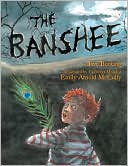
The Banshee.
September 2009.
Houghton Mifflin Harcourt.
Source: Review Copy Provided by Publisher


Summary from Barnes & Noble:

“SCREE . . . SCREE . . .” Terry is half asleep when he hears the wailing, rising and falling like the waves of the sea. He wishes it were a dream, but he knows it isn’t. It isn’t an owl screeching, either. Or the Flannerys’ old cat. Could it be the Banshee—the ghostly figure of Irish legend who wails outside a house when death is near? Why would she come here? In spite of his fears, Terry goes out to confront her. Is it really the Banshee, or . . . something else?

While this isn't in any way a Halloween story, the eeriness about it definitely makes it a good candidate for being a "Halloween" read. The dark illustrations had me picturing a Halloween night, dark and creepy. It was a very interesting read and even I learned something I wasn't familiar with - what a Banshee is! Do you know about Banshees? If not, pick up a copy of the book and check it out with your children!

Lesson Plans/Reading Activities
If you're interested in finding out more information about any of the books reviewed or if you'd like to purchase the books, click the cover image for a link to Amazon.com.

Sunday, October 4, 2009

Robin

How could a little bird have such power? Power enough to save spring?

Ouellet, Debbie.
How Robin Saved Spring.
March 2009.
Henry Holt and Company.


Summary from Barnes & Noble:

If Lady Winter has her way, the world will stay covered in blankets of snowy white and icy blue. Sister Spring will slumber forever and the winter will never end. Can Lady Winter really keep spring from coming or is there something the animals might do to help? Led by harbinger Robin, the animals are determined to wake Sister Spring, but what price will they each have to pay? Through beautiful words and pictures, this enchanting tale about the battle of the seasons highlights one special bird who saves much more than just the day.

I've had this book on my shelf awaiting review for a long time now... since I've read it, I've continually asked myself what the heck I was holding off on! Yes, it's really that good! I can honestly say I've never read a book like it and now that I have, I want to read more! Both the illustrations and the story itself have me hooked! I love how the Lady Winter is depicted in the cool, icy color of pale blue, while in contrast Sister Spring is presented to readers in the bright, warm colors we all love associated with springtime! If I had a class of my own right now, this book would be used right now as a springboard for a writing activity for the fall and then again in the winter months. However, since I'm not quite that blessed, I'll keep this in the back of my mind and will be quick to place it in my substitute teacher bag of tricks as a time filler come next spring!

Activity to Be Used in Collaboration with this book:
  • Growing up in my family, story time was always a routine at bedtime. However, story time didn't always necessarily mean physically reading a story. Sometimes, as a family, we'd work together to make up one of our own, each adding our own little parts. If the foundation is there for you, sometimes the story comes easily! Replace story time in your own family one night a week and give this method a try - I bet it will be a hit with the kids! Using this story as your springboard, create a new story each week. Try it out next week! Your title could be How Witch Saved Halloween.
  • In a classroom, use the book as a springboard for creating a monthly writing assignment, with a focus on how various holidays were saved. I think students will really enjoy these writing topics and will be eager to participate. I also think that over the course of the year, if you continually share the story each month, you'll see a big improvement in the development of student's work over time! The topics could be:

    September - How Pencil Saved the School Year
    October - How Witch Saved Halloween
    November - How Indian Saved the Thanksgiving
    December - How Rudolph Saved Christmas
    January - How Snowman Saved Winter
    February - How Cupid Saved Valentine's Day
    March - How Leprechaun Saved St. Patrick's Day
    April - How Jester Saved April Fool's Day
    May - How May Flowers Saved Memorial Day
    June - How Students Saved Summer
If you're interested in finding out more information about any of the books reviewed or if you'd like to purchase the books, click the cover image for a link to Amazon.com.
Monkeys

Kids seem to love monkeys - drawing them, watching them, visiting them at the zoo, even wearing them on their clothes. These two books will surely not disappoint your little monkey-lovers!

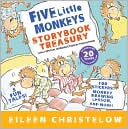
Christelow, Eileen.
Five Little Monkeys Storybook Treasury.
August 2009.
Houghton Mifflin Harcourt.
Guided Reading Levels:
Five Little Monkeys Jumping on the Bed: E
Five Little Monkeys Sitting in a Tree: F
Five Little Monkeys with Nothing to Do: I
Five Little Monkeys Wash the Car: I

Summary from Barnes & Noble:

This 20th-anniversary treasury features a special introduction and five full-length picture books—Five Little Monkeys Jumping on a Bed, Five Little Monkeys Bake a Cake, Five Little Monkeys Sitting in a Tree, Five Little Monkeys with Nothing to Do, and Five Little Monkeys Wash the Car—as well as a lesson on how to draw your own fabulous monkeys. Sheets of colorful stickers and musical notation round out this amazing collection. It’s the perfect addition to any child’s classic library.

I've always loved Five Little Monkeys Jumping on a Bed and Five Little Monkeys Sitting in a Tree, but wasn't familiar with the other three stories included in this treasury. They're every bit as good as the first two counting-themed stories and I know kids will love them! There's so much that can be done with these stories that they're definitely a choice I'd want to see on school, classroom and home library shelves.

Activities to Use in Collaboration with this book:
  • Five Little Monkeys Jumping on the Bed - Simple subtraction activity. Using construction paper, cut out the shape of a bed. Allow children to decorate the bedspread on their bed by coloring it. Pair students off. Give each pair of students some monkey manipulatives, similar to these. Using the Five Little Monkeys Jumping on the Bed worksheet, students will write number sentences after manipulating the monkeys. They will place 5 monkeys on the bed. Some number fall off and bump their heads. How many are left on the bed. ____-_____=_____. They will continue to do this until they have created all of the possible combinations that start with 5 monkeys on the bed until all five fall off. 5-0=5, 5-1=4, 5-2=3, 5-3=2, 5-4=1, 5-5=0. With older or more advanced students, you could have them do fact families to make the activity level a bit higher.
  • Five Little Monkeys Sitting in a Tree - Jenn, from Ramblings of a Crazy Woman created these craft stick monkeys and an alligator to use with this story. They could be used to for retelling and sequencing the events of the story, or could be used as puppets when singing the song.
  • Five Little Monkeys with Nothing to Do - This is a writing activity. Children will pretend they are one of the five little monkeys with nothing to do. All of their chores are done. Their homework is done. If they could do anything in the world, what would they choose to do? Write in your journal, 5-6 sentences answering this question. Be sure to use sentences, complete with capital letters and punctuation!
  • Five Little Monkeys Bake a Birthday Cake - After reading the story, provide children with this writing activity. Obviously these five little monkeys have no idea how to make a birthday cake. Let's see if you can help them! Write step-by-step directions for "How to Make a Birthday Cake." Read all of the writing samples that are turned in. The student who provides the directions closest to those needed to actually bake a cake "wins," however, the whole class will really win. That student gets to choose which kind of cake the class will bake - chocolate, vanilla, or strawberry and what kind of icing to frost the cake with. Then, together as a class, prepare, bake and enjoy the cake!
  • Five Little Monkeys Wash the Car - The five little monkeys are washing the car because they want to help their mother sell it so they can buy a new one. Organize a class car wash to raise money for a good cause. This will help children see the importance of giving back to the community and working as a team to accomplish a goal.
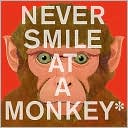
Jenkins, Steve.
Never Smile at a Monkey: And 17 Other Important Things To Remember.
October 2009.
Houghton Mifflin Harcourt.


Summary from Barnes & Noble:

When it comes to wild animals, everyone knows that there are certain things you just don’t do. It's clearly a bad idea to tease a tiger, pull a python's tail, or bother a black widow spider. But do you know how dangerous it can be to pet a platypus, collect a cone shell, or touch a tang fish? Some creatures have developed unusual ways of protecting themselves or catching prey, and this can make them unexpectedly hazardous to your health. In this dynamic and fascinating picture book by Steve Jenkins, you'll find out what you should never do if you encounter one of these surprisingly dangerous animals.

Steve Jenkins' books take on a whole new approach to children's non-fiction. Had these been around when I was young, I would probably be infatuated with non-fiction... however, even though I wasn't that fortunate, today's children are! This book provides today's children with so many interesting facts about things you should never do to/with animals! Definitely a great book to share!

Activity to Use in Collaboration with this book:
  • Assign each child one of the animals from the book. In addition to the information found within this book, ask the child to research and find more information about the animal, completing the research worksheet attached here, courtesy of West Hartford Public Schools. Once they have done that, assign a creative writing project to the student(s). The writing assignment is for children to create a story with the title, "I __________ a ___________," filling in the blanks with whatever animal and the advice Jenkins gave not to do. Children then need to be creative in coming up with a story about this animal and all that they learned about the animal. An example can be found here. I gathered my black bear information from Wikipedia for time's sake, but certainly you'd want students to consult a variety of resources to gather their information before completing the writing assignment.
If you're interested in finding out more information about any of the books reviewed or if you'd like to purchase the books, click the cover image for a link to Amazon.com.
Friday, August 28, 2009

Allen Say's Birthday

Allen Say, Asian American author, was born James Allen Koichi Moriwaki Seii, in Yokohama, Japan on August 28, 1937, to a Japanese American mother and a Korean father. His first children's book, The Boy of the Three-Year Nap, was published in 1972. Since then, he has authored nearly a dozen more books! I hope you enjoy these historical-fiction picture books as much as I do!

Say, Allen.
Home of the Brave.
2002.
Houghton Mifflin Harcourt.


Summary from Barnes & Noble:

In dreamlike sequences, a man symbolically confronts the trauma of his family’s incarceration in the Japanese internment camps during World War II. This infamous event is made emotionally clear through his meeting a group of children all with strange name tags pinned to their coats. The man feels the helplessness of the children. Finally, desperately he releases the name tags like birds into the air to find their way home with the hope for a time when Americans will be seen as one people—not judged, mistrusted, or segregated because of their individual heritage.

I know this book is supposed to be symbolic of the feelings of the children incarcerated during World War II, but aside from that, I just wasn't able to make a connection... if any of you have read and are familiar with this book, please share your thoughts with me... reason with me! Help me to understand - I think it has the potential of being a quality piece of literature to share with children, but I need help in making sense of it myself before being able to successfully share it with children.

Say, Allen.
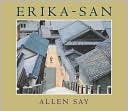
Erika-San.
2009.
Houghton Mifflin Harcourt.


Summary from Barnes & Noble:

In her grandmother’s house there is one Japanese print of a small house with lighted windows. Even as a small girl, Erika loved that picture. It will pull her through childhood, across vast oceans and modern cities, then into towns—older, quieter places—she has only ever dreamed about. But Erika cannot truly know what she will find there, among the rocky seacoasts, the rice paddies, the circle of mountains, and the class of children. For Erika-san, can Japan be all that she has imagined?

Allen Say is really starting to grow on me as an author. At first, I didn't really understand his work, but now, I'm slowly discovering the deeper meaning to be found within each book. This particular piece does a wonderful job sharing different aspects of the Japanese culture - in particular, the quieter Japan, opposite of the busy Tokyo. While I'm not sure that young children will understand the message conveyed here - there is great satisfaction to be found if you pursue your dreams, as it is conveyed by means of a "love story" of sorts. I think girls will be most apt to enjoy this particular Say work, but that's not say that boys won't find it equally interesting, especially if they're interested in learning about Japan.

Say, Allen.
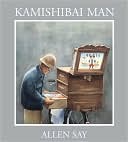
Kamishibai Man.
2005.
Houghton Mifflin Harcourt.
Guided Reading Level: N


Summary from Barnes & Noble:

The Kamishibai man used to ride his bicycle into town where he would tell stories to the children and sell them candy, but gradually, fewer and fewer children came running at the sound of his clappers. They were all watching their new televisions instead. Finally, only one boy remained, and he had no money for candy. Years later, the Kamishibai man and his wife made another batch of candy, and he pedaled into town to tell one more story—his own. When he comes out of the reverie of his memories, he looks around to see he is surrounded by familiar faces—the children he used to entertain have returned, all grown up and more eager than ever to listen to his delightful tales.

Now this is one Allen Say story that I would certainly want to add to my bookshelf! Not only does the story depict old-Japan vs. new-Japan, it shares with children a bit of their culture that should never have been forgotten - the Kamishibai, or picture storytelling. I could almost picture myself using this with say a 4th or 5th grade classroom - presenting each children with a different picture and assigning them to write a story about the picture. Using the writing process - drafting, editing, publishing, I would then create the wooden box theater that holds the picture and ask each child to be the Kamishibai Boy or Girl and share their story with the class. I think this would make for a really neat writing activity!

If you're interested in finding out more information about any of the books reviewed or if you'd like to purchase the books, click the cover image for a link to Amazon.com.

Wednesday, January 28, 2009

The 100th Day of School (Approximate)

Of course you'll have to use your own school calendar to determine the exact 100th day of school for your child or students! This day is used as a celebration to mark 100 days of learning, as well as to help younger students grasp the true concept of how much 100 really is. A few reviews for today as well as a handful of "100th Day" activities!

Cuyler, Margery.
100th Day Worries.
2000.
Aladdin Paperbacks.

Ages: 5-7
Genre: Realistic Fiction
Guided Reading Level: L

Review/Summary:

Jessica worries - about everything! And her latest school project is no exception to her worrying even though it should be a fun, worry-free project! The 100th day of school is fast approaching and Jessica's teacher has asked all of the students to bring in a collection of 100 items. Jessica begins to worry as she tries to sleep at night... then her classmates begin bringing in their projects.


  • 5 bags of 20 peanuts
  • 10 stacks of 10 paper clips
  • 4 bags of 25 peppermints
By Friday morning, the 100th day of school, Jessica still doesn't have her project completed but her family quickly tries to help.
  • Dad finds 10 ribbons in a kitchen drawer
  • Mom found 10 screws in a basement jar
  • Tom gave 10 rocket shaped erasers from his collection
  • Laura provided 10 beads from a broken necklace
  • Dad finds 10 buttons from his shirt drawer
  • Mom found 20 coins (10 pennies, 10 dimes) from her change purse
  • Laura gave 10 barettes
  • Tom got 10 rocks from Iggy's aquarium
But the bus quickly arrives and Jessica is 10 items short from her collection of 100! However, an unexpected surprise in her lunchbox provides her with the 10 items that she is short and she can soon turn in her project - 100 Bits of Love!

This story would be a great read-aloud before assigning children the same project - finding a collection of 100 items to share for the 100th day of school!

Slate, Joseph.
Miss Bindergarten Celebrates the 100th Day of Kindergarten.
1998.
Dutton Children's Books.

Ages: 4-8
Genre: Fiction
Guided Reading Level: J

Review/Summary:

Teachers! If you are looking for activities to complete with students for the 100th day of school, look no further! A snack idea is provided, along with tally mark hats! The book also would give students a wonderful variety of "100 collections" that they could bring in to share with classmates! The text is simple, the illustrations colorful and captivating and students will certainly love the variety of animal "students" in Miss Bindergarten Celebrates the 100th Day of Kindergarten.

Wing, Natasha.
The Night Before the 100th Day of School.
2005.
Grossett and Dunlap: New York, NY.

Ages: 4-8
Genre: Fiction, 100th Day of School
Guided Reading Level: N/A

Review/Summary:

A little boy can't decide what to bring to school as a collection of 100 for the 100th day of school. His classmates are bringing 100 photos, 100 jelly beans, 100 cars, 100 pencils... but when he breaks out his own collections he falls short every which way - he's short 51 dinosaurs, he doesn't have enough coins... as he goes to bed the night before the 100th day, in true "the night before" fashion, he dreams...

That night while I nestled all snug in my bed,
visions of ants, ants, and more ants,
danced in my head.

He finally knows what he'll bring for his collection and does he sure attract attention! This story ends with a great adventure that will surely have readers chuckling!

100th Day of School Activities: