Showing posts with label Character Education. Show all posts

Friday, August 5, 2011

Adventures at Walnut Grove: A Lesson about Teasing

Treat others as you would like to be treated!

Lehman, Dana.
Adventures at Walnut Grove: A Lesson about Teasing.
June 2007.
Lehman Publishing.
Review copy provided courtesy of publisher.


Young children learn the important lesson of "treat others as you would like to be treated" with the help of author Dana Lehman and her characters, Sammy, Bucky, Rocky and Pokey. A simple game of baseball become heartbreaking for Sammy as he is called names by one of the other players. However, Sammy holds his voice and does not retaliate, rather choosing to remember the lesson he was previously taught. However, later on, when Bucky, the name caller, is on the receiving end of the teasing, he suddenly has an awakening of how Sammy must have felt to be called raccoon eyes and learns that ever so important lesson for himself, opting to apologize for the pain he inflicted upon Sammy and the pair learns to become friends and vow never to call anyone names again.

The story is incredibly well written and would be appropriate with young children, as it is simple, yet allows children to really connect through the text. At the end of the book, Lehman poses the reader with a set of questions to use when sharing the story with children. These questions will help ensure that the most is taken away from the story! This is definitely a story I will try to incorporate in my Head Start classroom this year, as though the children are young and don't often understand the feelings they inflict with their words, there is certainly an abundance of name calling... perhaps this will help them to understand how they would feel, as well as how others on the receiving end feel when called a name.

Learning/Reading Activity:
  • Have your child choose one of the topics below to journal about:
    * Pick a time you were teased or called a name. Describe that time and write about how that made you feel.
    * Create a poster that teaches the lesson "treat others as you wish to be treated."
    * What would you do if you saw someone being teased or called a name by another person?


If you're interested in finding out more information about any of the books reviewed or if you'd like to purchase the books, click the cover image for a link to Amazon.com. I am an Amazon Affiliate, so any purchases you make after clicking these images will result in my receiving a small percentage of the sale price!

Monday, June 20, 2011

I Can Do It!

Book 3 in the Walnut Grove series encourages children to believe in themselves!

Lehman, Dana.
I Can Do It!
May 2010.
Lehman Publishing.
Review copy provided courtesy of publisher.


The characters of Walnut Grove return to teach readers another important life lesson in I Can Do It! After Bucky's near drowning experience in I DOUBLE Dare You!, he learned to take responsibility for his own actions and came to the decision to take swimming a bit more seriously. After spending a great deal of time practicing and learning how to swim, Bucky feels confident in his ability to swim and catch a frog on a lily pad. While some of his Walnut Grove friends discourage him from doing so upon remember his last swimming adventure, Bucky believes in his ability to swim now and eager sets forth, proving that his belief in himself, coupled with lots of hard work has enabled him to learn to swim.

In I Can Do It!, the Walnut Grove characters return to experience a new adventure, visiting a magic forest. It is there that Silly learns the important lesson to believe in himself. After displaying fear of being hurt while building a tree house, Willy lets Silly's friends know that he has become invisible because he "doesn't have the confidence to believe in himself." With much encouragement from his friends and the reminder that he is in a magical forest, Silly begins to believe in himself and eventually does help out building the tree house.

The important lesson to be learned is that belief in yourself is a form of magic - if you believe you can do it, you WILL do it... this is a very important lesson for children who hesitate and seem unsure of themselves, allowing them to find the confidence to try! Definitely a great book for households, libraries and classrooms, as you never know when a child will need this form of encouragement and message!

Reading/Learning Activities:
  • In their summer journal, have your child write a list of new things they would like to try/achieve this summer. This will give them a purpose to do something productive each day and to track their success as it is achieved.
  • Choose one of the topics mentioned in their summer journal and encourage your child to believe in his/herself by trying something new this summer. Ask them about something they would like to do but are a bit fearful of - use words of encouragement and gentle prodding to help them realize that their belief in themselves will enable them to achieve a personal goal! Keep a scrapbook of your child's attempts to achieve their goal - including failures from day one until the day they reach their goal. This will be neat to turn into a book and a great reminder of the summer's achievements!


If you're interested in finding out more information about any of the books reviewed or if you'd like to purchase the books, click the cover image for a link to Amazon.com. I am an Amazon Affiliate, so any purchases you make after clicking these images will result in my receiving a small percentage of the sale price!

Tuesday, May 3, 2011

Children's Book Week, Post 2: The Greedy Sparrow

Teach children that rather than greed, appreciate what they have!

Kasbarian, Lucine.
The Greedy Sparrow: An Armenian Tale.
April 2011.
Marshall Cavendish.
Review copy provided courtesy of publisher.


The Greedy Sparrow teaches (older) children an importance lesson about how greed may come back to haunt you. A sparrow starts out asking for a simple favor. However, his simple favor quickly turns into asking for more and more to see just what he can gain. Just when the sparrow thinks he's hit it big, he gets his "pay back," winding up with nothing more than he started with.

The story is more appropriate for older children, as the concept may be harder for young children to understand - perhaps because of the unfamiliar "gifts" in which the sparrow is greedy about. However, if you're creative, you could adapt the story for younger children by changing out the "things" that the sparrow is requesting. As I said... you would have to be creative in doing this appropriately and I'm not sure I have it in me, quite frankly, so I think I'll leave this one to the older children!


If you're interested in finding out more information about any of the books reviewed or if you'd like to purchase the books, click the cover image for a link to Amazon.com. I am an Amazon Affiliate, so any purchases you make after clicking these images will result in my receiving a small percentage of the sale price!

Tuesday, March 29, 2011

Sneaky Sheep

Help children understand the importance of following the rules with the Sneaky Sheep!

Monroe, Chris.
Sneaky Sheep.
August 2010.
Lerner Publishing Group.
Review copy provided courtesy of publisher.


Blossom and Rocky are not only sneaky sheep! They also seem to have trouble following the rules and are continually trying to do what they've been asked not to do. The two have always taken notice of the other, greener meadow up higher on the mountain. They're determined to explore it despite the warnings and rules of Murphy, the Sheep Dog that's been "hired" to keep the sheep safe. When they finally make it up to those "greener grasses," they find themselves in a pickle, ultimately learning the hard way that there really was a reason that Murphy forbid them from going there in the first place!

Sneaky Sheep will hopefully help children understand that there really IS a reason that rules exist and that it's important to follow them for their own safety! I've definitely got to give this one a read in my Head Start class - I constantly have children testing me, believing the rules are only in place because "you don't want me to have any fun!" Perhaps they'll learn a lesson of their own from Rocky and Blossom!


If you're interested in finding out more information about any of the books reviewed or if you'd like to purchase the books, click the cover image for a link to Amazon.com. I am an Amazon Affiliate, so any purchases you make after clicking these images will result in my receiving a small percentage of the sale price!

Monday, March 14, 2011

Children will quickly understand the importance of taking responsibility for your own actions and learning to make the good (and right) choice!

Lehman, Dana.
I DOUBLE Dare You!
April 2008.
Lehman Publishing.
Review copy provided courtesy of publisher.


Silly and Sassy head to Walnut Grove Resort to spend a week vacationing with their cousin, Sammy. Sammy knows that he has to watch out for his cousins, as they're always getting in trouble. However, despite his best efforts, Sammy isn't able to keep the pair out of trouble and it takes a big adventure for Silly and Sassy to learn the lesson that they have to take responsibility for their own actions and not just try and please their friends (or others), especially if they know that they're about to do something that could be considered "wrong."

After number behavior issues have popped up in my Head Start classroom, I just knew I had to share this book with my students after having read it on my own. I got mixed reactions when I read it. Of 16 children, I would say about half sat contentedly and listened. The other half behaved in a typical manner, unable to sit for a story of any length. It's not unexpected, at least in my room! The children who were engaged were VERY engaged and responded appropriately throughout, including making appropriate predictions! From my conversation and interaction with the children, I would say they definitely were able to understand the message shared... and I'm hoping that it will sink in, as many of those who were engaged are also my "behaviors," who could certainly benefit from the message given! We'll have to see how things go, but I'm thinking with a few reminders of the characters and the message, they just might catch on!

It's also easy to see why I DOUBLE Dare You! is the recipient of the Mom's Choice Award - any mother would want their child to understand the importance of the message relayed in this wonderfully written and illustrated book! I'm so glad to have been informally introduced to the author through a cousin!


If you're interested in finding out more information about any of the books reviewed or if you'd like to purchase the books, click the cover image for a link to Amazon.com. I am an Amazon Affiliate, so any purchases you make after clicking these images will result in my receiving a small percentage of the sale price!

Tuesday, February 22, 2011

That's Not Funny!

When the table's turned, things might not look so funny!

Willis, Jeanne.
That's Not Funny!
August 2010.
Lerner Publishing Group.
Review copy provided courtesy of publisher.


The hyena, an animal known for his laugh, decides to play a practical joke on giraffe, but once things get started, they quickly spiral out of control. Who knew a banana peel, intended to trip up Giraffe could have an effect on Hippo, Snake, Ostrich, Rhino, Turtle, Vulture, Zebra, Cheetah, Wildebeest, and Elephant before getting even with Cheetah himself for all the laughter and "funnies" that Cheetah found from the misfortunes suffered by all the other animals. As I've always been told, "Paybacks are a b*$#%!" and Cheetah quickly learns that lesson when the tables are turned on him!

This is a wonderful book to help teach young children to not find the misfortunes of others funny, for you never know when you might be on the receiving end! I've experienced my share of laughter in my Head Start classroom when one child trips or falls (or something to that effect) and others laugh at them... The title alone is enough to teach children to use their words rather than retaliate with actions when they aren't finding someone else's actions funny! I'm definitely going to put this in my bag for reading upon return to school after mid-winter break!


If you're interested in finding out more information about any of the books reviewed or if you'd like to purchase the books, click the cover image for a link to Amazon.com. I am an Amazon Affiliate, so any purchases you make after clicking these images will result in my receiving a small percentage of the sale price!

Monday, June 7, 2010

The Bubble

A life's lesson, useful to all!

McClure, Brian.
The Bubble.
January 2006.
Universal Flag Publishing.
Review copy provided courtesy of publisher.


A little boy is sick of his things - he no longer wants to play with them. As he goes to sleep one night and settles into a dream, he learns a deeper message than he ever could have dreamed of... watching himself age over time from the little boy that he is to the old man he'll become, who dies alone, after having shut the world out and making his life all about his possessions, rather than including people in the mix. The little boy wakes up just as he is about to die an old man, all alone, with no friends and no possessions that are of any worth to him. Upon his awakening, the little boy suddenly has a different outlook on life and is more appreciative of what he has and is eager to share and join in with people.

This story is wonderfully written in a unique way that will appeal to almost everyone. It sends a powerful message that is easy to walk away with. However, I worry about sharing this book with younger children, as I fear the way that the "death" is portrayed may frighten them. However, that being said, I think the book is very much appropriate for children ages 8+, up to adults and the elderly, especially those need just a gentle reminder that life isn't about what you have, but rather about the quality of the relationships and items you do hold.


If you're interested in finding out more information about any of the books reviewed or if you'd like to purchase the books, click the cover image for a link to Amazon.com. I am an Amazon Affiliate, so any purchases you make after clicking these images will result in my receiving a small percentage of the sale price!

Wednesday, October 21, 2009

National Character Counts Week

One of the greatest building blocks of character is citizen service. The future belongs to those who have the strength of character to live a life of service to others. Character Counts week is celebrated this week, October 18-24, 2009.
-The Teacher's Calendar, 2008-2009

Character education is a huge part of today's school curriculum. Alongside literature, simple daily activities can allow children to see "character" in the works. These discreet stories really allow children to see how to be a good "character" or citizen, while also enjoying participating in a reading or listening to a story.

Sommer, Carl.
King of the Pond.
2000.
Advance Publishing, Inc.
Guided Reading Level: L
Source: Copy borrowed from local library


Summary from Barnes & Noble:

Tombo the tadpole declares himself King of the Pond. He brags that he's the biggest, the fastest, and the strongest tadpole, and he teases and chases all the other tadpoles. But one day while showing off doing a triple flip, Tombo's life takes a major turn. He's captured by a boy and taken from his lush pond to a fish tank. There Tombo is fed dry fish flakes, a food he despises. When Tombo turns into a frog, the boy releases him back into his pond. Tombo discovers that he's no longer the biggest and fastest. It's then he discovers something much more important than being King of the Pond. Explore the themes of bullying, friendship, and forgiveness in this beautifully illustrated story.

Respect for others, forgiveness and sportsmanship are the character traits that are featured in this edition of "Another Sommer-Time Story" series. Here, a bully learns that being a bully and bragging about all that he can do doesn't pay off in the end. However, perhaps the most important lesson to be learned is that it's important to forgive in the end - and that's just what Tombo's friend's do, despite the way in which they were earlier treated. This book would fit perfectly into a science curriculum, as it also explains the lifecycle of the frog. Definitely a great book to have on hand for teachers (and parents, as well).

Sommer, Carl.
The Ugly Caterpillar.

2000.

Advance Publishing, Inc.

Guided Reading Level: K
Source: Copy borrowed from local library


Summary from Barnes & Noble:

When a tiny, yellow egg appears on the scene, three friends, Speckles the spider, Crumbs the cricket, and Annie the ant, aren't sure what to think. But when Katy the caterpillar appears, Speckles and Crumbs think the caterpillar is much too ugly to be their friend. Only Annie the ant looks past the caterpillar's funny shape and makes friends with Katy. As Katy the caterpillar begins her strange transformation into a beautiful butterfly, Annie is shocked and amazed. This educational and beautifully illustrated story shows the true meaning of beauty and friendship and the pitfalls of judging others by their appearances.


I had the opportunity to use this book with a third-grader over the course of the summer - she loved the story... and even better, she learned a LOT while reading the book! Respect for others, as well as kindness and friendship are expressed throughout this story, when Annie befriends an "ugly caterpillar" who develops into a beautiful butterfly. The lesson to be learned is "not to judge a book by its cover" - that true beauty lies within. Perhaps what I enjoyed most about the book is the fact that it also would work perfectly in a science unit when studying the life cycle of a butterfly, as we watch while Katy the Caterpillar transforms from an ugly caterpillar into a butterfly. This definitely holds a place on my shelf!

Sommer, Carl.
No One Will Ever Know.
1997.
Advance Publishing, Inc.
Guided Reading Level: L
Source: Copy borrowed from local library


Summary from Barnes & Noble:

Teased by their friends that no one will ever know, Johnny and Janie ignore their parents' warnings about the big, bad wolf. Wanting big, delicious acorns at Mr. Smith's farm, they and their friends hatch a plan to sneak out of their homes during the night. They can't wait to feast on the delicious acorns from Mr. Smith's farm. The young squirrels' moon-lit adventure and delightful meal suddenly ends when a very hungry wolf chases them. Barely escaping with their lives, the young squirrels learn to disobey is wrong even when you think no one will ever know.

After reading this story, children will begin to understand the importance of listening to their parents and elders, even if something might not make sense to them. I don't think the lesson to be learned here is quite as clear as in the previous two books reviewed, but I do think it begins to show children the importance of listening and follow the rules - as rules exist for a reason!

Carl Sommer's Other Books about Character Education:
  1. Proud Rooster and Little Red Hen
  2. It's Not Fair
  3. If Only I Were...
  4. Can You Help Me Find My Smile?
  5. Three Little Pigs
  6. The Sly Fox and the Chicks
  7. The Richest Poor Kid
  8. The Little Red Train
  9. I am a Lion!
  10. You Move, You Lose
  11. Time Remote
  12. Dare to Dream
  13. Spike the Rebel
  14. Tied Up in Knots
  15. Noise! Noise! Noise!
  16. No Longer a Dilly Dally
  17. Light Your Candle
  18. The Great Royal Race
  19. Your Job is Easy
  20. Miserable Millie
  21. Mayor for the Day
  22. Character Education Curriculum Guide
If you're interested in finding out more information about any of the books reviewed or if you'd like to purchase the books, click the cover image for a link to Amazon.com.

Tuesday, September 29, 2009

Stan Berenstain's Birth Anniversary

Today, September 29 marks Stan Berenstain's birth anniversary. He was born in Philadelphia, PA in 1923. Stan Berenstain published his first children's book, The Great Honey Hunt, in 1962. He and his wife, Jan, went on to collaborate on more than 200 books featuring "The Berenstain Bears," a lovely family of bears dealing with the everyday problems that children face. The boeloved characters have had their own television show, videos, DVDs and toys, and remain popular today. Berenstain died at Bucks County, PA on November 26, 2005.
-The Teacher's Calendar, 2008-2009

When I was little, the books in "The Berenstain Bears" series were my all time favorite books. I still have a large collection of them today and can see them as a valuable asset to the education of today's children, as they teach very important messages through friendly, funny characters that will appeal to children. I had a hard time picking out the books for todays post, two older ones that I feel portray some of the most important messages and one brand new one - yup! Brand new! Hopefully you and your children will enjoy these books as much as I did (and still do)!

Berenstain, Stan and Jan.
The Berenstain Bears Forget Their Manners.
1985.
Random House.


Summary from Barnes and Noble:

"Mama Bear wasn't quite sure how or why it happened...But the Bear family had become a pushing, shoving, name-calling, ill-mannered mess!" Even Papa bangs on the table at dinner and shouts. Mama finally calls a family meeting and presents her Bear Family Politeness Plan. The plan has a list of all the rude things she wants to stop.

If you're looking to instill the value of using manners in children of young ages, this book is perfect for doing so! Children are sure to love the Berenstain Bears (if they aren't already familiar with the series) and will easily relate to Brother and Sister's behaviors. Couple this with the few books mentioned below, and you'll have a great curriculum for teaching about manners. Children will quickly learn that if they use good manners, they'll make it farther and have an easier time in life!

Other Books that Teach Manners:
Activities to Use in Collaboration with The Berenstain Bears Forget Their Manners:
Berenstain, Stan and Jan.
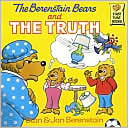
The Berenstain Bears and the Truth.
1983.
Random House.


Summary from Barnes and Noble:

When Brother and Sister Bear accidentally break Mama's favorite lamp, their little lie grows bigger and bigger, until Papa Bear helps them find the words that set everything right again.

I'm not sure why, but many children these days (especially) seem to have a hard time with telling the truth. I guess that's why there's such a need for literature that promotes the idea of telling the truth! This book is ideal for young children as the lie being told is something that children can easily relate to. The important message that children will hopefully catch on to is that if they want their parents to trust them to make some choices for themselves, they must first prove to their parents that they are worthy of being trusted to do the right thing! Again, I would not use this book alone in trying to teach children the importance of telling the truth, but rather alongside some other stories that children will be able to relate to equally.

Other Books that Teach Truth:
Berenstain, Jan and Mike.
The Berenstain Bears' Sick Days.
September 2009.
HarperCollins.


Summary from HarperCollins:

Sister is home sick from school. Mama wants to take good care of her so she can get well quickly. It turns out that keeping Sister happy all day long is no small job! Soon both Sister and Mama are more than ready for a return to school.

Children will get a taste of their own medicine as they watch Sister Bear on her "sick day!" For kids, sick days mean a day off school, but for Mama's, sick days mean a whole lot of extra running around! Sister Bear finally shows compassion towards Mama at the end of the story when Mama comes down with whatever Sister was sick with! This newest book in the Berenstain Bear series would make a perfect cheer-up, feel-better gift for your sick little one (and will keep then entertained for a bit to give you the few-minute break you need on a sick day)!

If you're interested in finding out more information about any of the books reviewed or if you'd like to purchase the books, click the cover image for a link to Amazon.com.

Friday, March 13, 2009

Deaf Awareness Day

Today is Deaf Awareness Day, so I've got a couple of stories to share that would be perfect to introducing young children to deafness or to just further their knowledge so they are accepting and respectful to those who are deaf.

Millman, Isaac.
Moses Goes to School.
2000.
Farrar, Straus and Giroux: New York, NY.


It's the first day of school for Moses, and like most children, he's eagerly anticipating reconnecting with his friends after a long summer vacation. However, when Moses arrives at school we quickly learn that he's attending a special public school for the deaf. Children at the school do basically all the same things that hearing children are used to: writing to pen pals, using the computer, singing and dancing, and learning how to read and write. It is important that children see the similarities between themselves and deaf children in order for acceptance and understanding to take place.

The book is truly wonderful and would open the doors for wonderful conversation. It would fit well in a classroom as part of a character education program featuring acceptance/diversity or even to just use to introduce students to sign language, as much ASL is provided throughout the reading.

Heelan, OTR/L, Jamee Riggio.
Can You Hear a Rainbow?: The Story of a Deaf Boy Named Chris.
2002.
Peachtree Publishers: Atlanta, GA.


Chris, a young boy, shares with readers how his deafness affects his life. He explains how he communicates with his family and friends: the use of sign language, visual clues, lip reading and hearing aids to compensate for his inability to hear words.

The illustrations, life-like body parts photographs added to the drawn clothing allows children to visualize the concept that deaf children look the same as hearing children. I think this really helps make a point! The story also does a wonderful job of showing children how children who are deaf are lacking one of their senses but make up for the lacking sense in other ways and is able to communicate feelings and thoughts just as well as hearing children.
This is definitely a book that would a wonderful addition to a unit about the 5 senses or to be used for teaching acceptance and diversity in the classroom!

If you're interested in finding out more information about any of the books reviewed or if you'd like to purchase the books, click the cover image for a link to Amazon.com.

Friday, February 6, 2009

Crayons, Crayons, Crayons...

DeRolf, Shane.
The Crayon Box that Talked.
1996.
Random House: New York.

Ages: 4-8
Genre: Fiction, Character Education (Tolerance and Prejudice)
Guided Reading Level: N/A

Review/Summary:

A little girl enters a toy store one day to find a crayon box that talks. However, what she hears the crayons saying upsets the little girl enough to make her want to teach them a lesson. She does just that, buying and taking home the box of crayons. By the time she's done drawing her picture, the crayons have most definitely learned their lesson and really and truly finally appreciate each other and all they have to offer!

This story teaches a powerful lesson in a very simple manner - accept and appreciate the differences and uniqueness of everyone! This would make for a wonderful character eduction lesson plan about diversity, prejudice and tolerance.

Lesson Plans/Book Activities:
Charles, Oz.
How is a Crayon Made?
1988.
Simon & Schuster Books for Young Readers: New York, NY

Ages: 4-9
Genre: Non-Fiction
Guided Reading Level: N


Review/Summary:


This book details, step-by-step the process of making crayola crayons. The text itself is pretty simple and would likely capture the attention of children.


Lesson Plans/Book Activities:

Ryan, Pam Munoz.
The Crayon Counting Board Book.
1997.
Charlesbridge: Watertown, MA.


Ages: Infant - 3
Genre: Non-fiction, Board Book
Guided Reading Level: N/A

Review/Summary:

This is a wonderful book to use to introduce the concept of numbers and one-to-one correspondence to young children. For each number give, a certain colored crayon is used to draw a series of pictures that match the number shown, for example, a blue crayon is used to draw two blue fish for the number 2.

Another edition of this book is available for older readers, providing rhyming text and introducing the concept of counting by 2's.

Lesson Plans/Book Activities: