Showing posts with label Robin Nelson. Show all posts

Thursday, November 19, 2009

Thanksgiving on Thursday!

So, I stole the post title from the famous Magic Tree House series... but it's appropriate. Thanksgiving is officially one week from today, and therefore it's time to break out some literature to help the festivities begin! Here are a few suggestions for you and the children!
Havill, Juanita.
Jamaica Is Thankful.
October 2009.
Houghton Mifflin Harcourt.


Every year on Thanksgiving Day in my house, it's tradition to go around the table and tell what you are thankful for. A lot of times the things that we're thankful for seem to be trivial, unimportant things that we could easily get along without. If this is a tradition at your house too, this is a wonderful book to share with your family. While there is no Thanksgiving emphasis whatsoever, we see a little Jamaica as she learns that she's thankful for her brother, Ossie, even though his pet allergies result in Jamaica having to give up a cute, cuddly kitten. This would also be a good book to share if you have children at home who don't seem to really appreciate each other for who they are and not what they are!
Nelson, Robin.
Thanksgiving.
August 2009.
Lerner Classroom.


I've featured numerous books by Robin Nelson on my blog in the past. However, this one stood out just a bit more than normal as I read it. It seems like it would be an ideal book for the youngest of children who are just beginning to learn what Thanksgiving's all about! Not only that, it's perfect for beginning readers, as the limited text works alongside the photograph illustrations to provide ample context clues for unknown words and vocabulary! This is definitely a book I'm glad to add to my library!
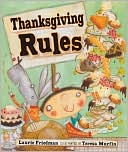
Friedman, Laurie.
Thanksgiving Rules.
September 2009.
Lerner Publishing Group.


Percy Isaac Gifford is a little boy who knows everything, EVERYTHING there is to know about Thanksgiving and he's here to share his knowledge with your little ones to ensure their Thanksgiving be as successful as possible! If they're willing to follow his ten rules (all of which are explained in greater detail in story format), everyone should have a Happy Thanksgiving!

Rule 1: Smile and say "Pumpkin Pie!"
Rule 2: Eat, drink, but first clean!
Rule 3: Short = Sweet
Rule 4: The early bird gets the turkey.
Rule 5: The more the merrier!
Rule 6: Don't be afraid to eat EVERYTHING!
Rule 7: Don't stop or drop, just take some rolls.
Rule 8: The 2nd time is the charm!
Rule 9: Life is sweeter when you eat sweets.
Rule 10: A hug makes the heart grow fonder.

While some of these rules (when stated alone) may make absolutely no sense to you or even your kids, everyone will for sure be chuckling as you read them alongside the rest of Percy's advice. This is a light-hearted, funny book that is perfect reading for the night before Thanksgiving! It might even be fun to encourage your child(ren) to come up with an 11th rule of their own that could be added to Percy's rules!

Some Thanksgiving Fun for the Kids:
If you're interested in finding out more information about any of the books reviewed or if you'd like to purchase the books, click the cover image for a link to Amazon.com.

Thursday, November 12, 2009

Peanut Butter Lover's Month

November 1-30 brings about the celebration of America's favorite food and #1 sandwich - Peanut Butter!
-The Teacher's Calendar, 2008-2009

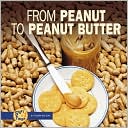
Nelson, Robin.
From
Peanut to Peanut Butter.
January 2004.

Lerner Publishing.


Summary from Lerner Publishing:

How is peanut butter made? Farmers plant peanut plants, which grow small shells filled with peanuts. The peanuts are collected, cleaned, and sent to factories. There, they are sorted, removed from their shells, cooked, crushed, and mixed with sugar and other ingredients to make ooey, gooey peanut butter for people to eat.

This book is the perfect introduction to the work that goes into making peanut butter! The simple text makes it appropriate for the youngest peanut butter fans, while there is also a great deal of text that makes the book appropriate for older children who are seeking more details about the process of turning peanuts into peanut butter. Definitely one I would use if teaching a theme about peanuts and peanut butter!

Westcott, Nadine Bernard.
Peanut Butter and Jelly: A Play Rhyme.
1987.
E.P. Dutton.
Guided Reading Level: G


Summary from Barnes & Noble:

Rhyming text and illustrations explain how to make a peanut butter jelly sandwich. Includes instructions for accompanying hand and foot motions at the end of the book.


This a great book for children, as the rhyming text does allow some predictability. Coupled with the predictablity factor, the book is appropriate for young readers because of the movement that keeps them actively involved. Getting children actively involved in reading allows them not only to connect with the story, but also to get out the energy that might be hindering their ability to concentrate! This is definitely a great book for early childhood classrooms and would be a great book to use to teach children the concept of ordering - what is the first step? What's second? What do we do third? Definitely one I'll consider using when the day comes that I have an early childhood classroom!

Lesson Plans/Reading Activities:
  • Peanut Lapbook, put together courtesy of Sherry at Living and Learning
If you're interested in finding out more information about any of the books reviewed or if you'd like to purchase the books, click the cover image for a link to Amazon.com.

Saturday, June 13, 2009

Tying up Life Cycle Saturday ... Finally!

I've been trying to "tie up" Life Cycle Saturday for over a month now! So, here are the last two reviews I had planned! Pumpkins and butterflies!

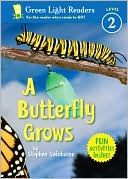
Swinburne, Stephen.
A Butterfly Grows.
2009.
Houghton Mifflin Harcourt.


This is a very simple text that would be ideal for young children, pre-school through 1st grade! It's nice because the youngest children will gain a basic understanding of the butterfly life cycle through the simple language being read to them. For older children (1st graders), the book is geared toward beginning readers - the language is simple and quite predictable when using the photos as context clues!

I will definitely keep this one with my other butterfly books for use in a classroom!

Lesson Plans/Worksheets:
Other Butterfly and Butterfly Life Cycle Books:
AND!!!!... For Some Great Summertime Fun!
(I was fortunate enough to land a long term sub position in a 3rd grade classroom and we used the Certificate for Live Butterfly Garden during the Butterfly Unit... Out of about 30 we received, I'd say we hatched 25! The students loved it!)

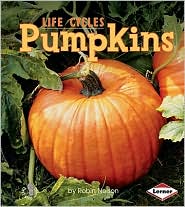
Nelson, Robin.
Life Cycles: Pumpkins.
2009.
Lerner Publishing.

It's not too late to start a small pumpkin patch of your own for this fall! Why not turn it into a summer of learning about the pumpkin life cycle? Although this book is a bit pricey at the time (currently available in library binding), it's definitely worth the investment (or maybe your local library has a copy available to be checked out)!

As one of a whole slew of plant life cycle books, this is no less disappointing than Apple Trees, Dandelions, Strawberries, Sunflowers or Tomatoes! It is very simple, yet accurately describes the life cycle of pumpkins: roots -> sprout -> seedling -> leaves -> vines -> buds -> flowers -> pumpkins starting to grow -> flowers falling off -> pumpkins turning to orange and the seeds located inside -> seeds being eaten by animals/people or being planted as a new crop of pumpkins!

Lesson Plans/Worksheets:
Other Pumpkin and Pumpkin Life Cycle Books:
Fun Summertime Activities:
Other GREAT life cycle books for teaching children:
If you're interested in finding out more information about any of the books reviewed or if you'd like to purchase the books, click the cover image for a link to Amazon.com.
Saturday, April 18, 2009

Life Cycle Saturday #3

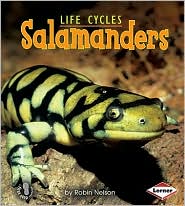
It's Life Cycle Saturday #3. Salamanders this week! The kids are going to love it (as long as they aren't afraid of amphibians)!

Nelson, Robin.
Life Cycles: Salamanders.
2009.
Lerner Publishing Group, Inc.

Lots of information to share in this one, as all parts of the Salamander life cycle are, surprise!, mentioned! However, in order for students/children to make the most of this life cycle learning, they must first have an understanding of the word larva, as it is mentioned on nearly every page.

The photographs are colorful and appealing to the eye, will quickly catch the attention of young children, especially if they've ever tried catching a salamander or newt (my brothers and I did that every year as children as part of our weekend camping trips throughout the summer)! Why not turn this fun summer activity into a life-long learning experience? This book is perfect for a young child who's just starting to show an interest in amphibians, and especially salamanders!

Lesson Plans/Reading Activities:
If you're interested in finding out more information about any of the books reviewed or if you'd like to purchase the books, click the cover image for a link to Amazon.com.
Saturday, April 4, 2009

Life Cycle Saturday #1

It's spring! And when I think spring, I think rebirth! What better time to feature a four part post on life cycles? Today brings the first post in the series, one that will surely have the boys (and likely many girls) interested!

Nelson, Robin.
Life Cycles: Worms.
2009.
Lerner Publishing Group, Inc.


This very simple non-fictional text depicting the life cycle of a worm is very much appropriate for the Kindergarten thru 2nd Grade Level. The read-abliity is appropriate for beginning readers but allows room for much discussion.

The photographs that are provided alongside the text allow readers to realistically visualize the worm and it's habitat. This would definitely be a great addition to any unit on life cycles!

Lesson Plans/Book Activities:

Other Great Books about Worms

If you're interested in finding out more information about any of the books reviewed or if you'd like to purchase the books, click the cover image for a link to Amazon.com.