Showing posts with label Guided Reading Level M. Show all posts

Monday, July 12, 2010

Lightning Bolt Books - Famous Places Series

Research some of the most famous places in the United States - and then make it a point to visit them!

Bullard, Lisa.
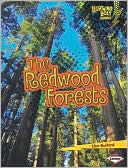
The Redwood Forests.
March 2010.
Lerner Books.
Guided Reading Level: M
Review copy provided courtesy of publisher.


The redwood forests contain the world's tallest trees - evergreen trees. Located in Oregon and Northern California, visitors are drawn to the forests because of the factual information (being the tallest living things on Earth), the wildlife and flora within, and the atmosphere found within. In The Redwood Forests, readers will learn about all this, as well as how Redwoods grow and change from year to year.

The book is chuck full of information and contains beautiful photographs taken within the confines of the forests. Coupled with the photographs, the information is very relevant and likely easy for young readers to understand, as it is simple, yet to the point. I've been interested in visiting the Redwood Forests since I reviewed a fiction book about them back in April 2009. One day, I will make it there! Until then...

Learning/Reading Activities:
Piehl, Janet.
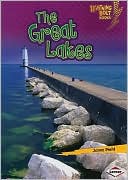
The Great Lakes.
March 2010.
Lerner Books.
Guided Reading Level: N
Review copy provided courtesy of publisher.


Formed millions of years ago from melting glaciers, the Great Lakes are located on the border of Canada and the north central United States. All of the Great Lakes are freshwater lakes, connected by a series of rivers, smaller lakes and canals. They are the world's largest group of freshwater lakes. In The Great Lakes, readers will learn details and facts about each of the five lakes that make up the Great Lakes. The book is complete with information about lake life, including the animals that live around the lakes, as well as details about how the Great Lakes have played a role in the history of the United States.

The book provides readers with a wealth of important information pertaining to the Great Lakes. The text is simple, yet detailed enough to paint an important picture and share necessary information. Coupled with the gorgeous photographs, readers will certainly be captivated when learning about the Great Lakes.

Learning/Reading Activity:
  • After reading, have your child(ren) complete an outline detailing important facts about each of the Great Lakes. Ask them to find three details from the book and then send them to Great Lakes Web Page for Kids to find an additional two bits of detail about each lake. The worksheet can be downloaded here.

If you're interested in finding out more information about any of the books reviewed or if you'd like to purchase the books, click the cover image for a link to Amazon.com. I am an Amazon Affiliate, so any purchases you make after clicking these images will result in my receiving a small percentage of the sale price!

Thursday, February 18, 2010

Pizza and Pasta Math

So... there are a whole bunch of ways to use pizza and pasta to explore mathematical concepts. I was really hoping to focus on fractions (with pizza at, at least), but the book I wanted to review for that concept wasn't available... so, I settled for these Pizza Counting... not that it isn't great in its own way! As for pasta, this was a wee bit harder, but I did find one book that took a creative approach to pizza and pasta and have somewhat of a mathematical concept!

Dobson, Christina.
Pizza Counting.
2003.
Charlesbridge.
Guided Reading Level: M
Review copy borrowed from local library.


In this clever book children will quickly catch on that the counting takes place based on the number of different toppings found on each of the pizzas. The book is great for practicing not only counting skills, but also simple addition for children who still need to visualize numbers and actually count up the two (or more) items to come up with the total (or sum). The crazily-decorated pizzas found within (a clock, a kitten, etc.) will have children giggling and anxious for what's to come! The book also provides interesting trivia - all related to pizza... Do you know how many 12 inch pizzas placed crust to crust are needed to build a path to the moon? Fractions are also briefly introduced, but I think I would find myself straying away from these pages, as fractions are supposed to represent equal parts and that isn't necessarily the case here (what, with crazy faces/decorations and all). I think the book would be most useful for simple counting and addition!

Learning/Reading Activity:
  • I have created an addition work packet to coincide with the pizzas in the book, based on counting specific toppings and then adding to see the combined totals. The packet can be downloaded here. (I've recently upgraded to Microsoft Word 2010 - the packet appears to have saved/downloaded as a .docx file. I tested this on my other computer with an older version of Word and it formatted correctly. If you have trouble, leave a comment here and I'll save it on the other computer as just a .doc file and reupload!)
Hardesty, Constance.
Grow Your Own Pizza: Gardening Plans and Recipes for Kids.
2000.
Fulcrum Publishing.
Review copy borrowed from local library.


What a super-fun book for kids (and adults)! This book provides readers with the chance to get creative with their gardening, while at the same time encouraging healthy eating habits and using mathematical concepts (most appropriate for older children, but still manageable with the younger ones)!

Three particular gardening plans and recipes are appropriate for this week's pizza and pasta theme: Queen Margherita's Pizza Garden (easy gardening), Your Own Personal Pizza Garden (medium gardening skills), and It's-Not-Spaghetti Garden (advanced gardening). I'm going to separate the remainder of this review based on those three categories!

Queen Margherita's Pizza Garden
  • This garden is ideal for beginning gardeners: 3 simple plants (tomatoes, garlic and basil).
  • The garden is created in the shape of a rectangle (perfect to discuss with the youngest gardeners)... or you can get more complex with older children by discussing the gardening plot as "area."
  • The garden can also be started (and fully grown) indoors as a "container" garden.
  • The recipe itself is a no-oven recipe (although it does require microwaving)
Your Personal Pizza Garden
  • This garden is ideal for those of you who have some minimal gardening experience: 7 ingredients (oregano, basil, tomatoes, green onions, bell peppers, zucchini, garlic).
  • The garden is actually shaped in a triangle. Again, this allows the perfect opportunity to discuss either shapes or area, depending on your child(ren)'s math skills!
  • Again, this garden too, can be started (and completed) as a container garden if space is limited or unavailable!
  • A suggested activity is inviting 11 of your child's friends to join in on the personal pizza making fun, as the pizza makes 12 servings!
It's-Not-Spaghetti Garden
  • This garden is ideal for more advanced gardeners: again 7 ingredients (however, a bit more needy of TLC) - carrots, garlic, parsley, basil, bell peppers, spaghetti squash, yellow summer squash.
  • Sorry, no fancy shape here!
  • This not-spaghetti garden has growers experimenting with spaghetti squash as a healthier alternative to actual spaghetti (interesting for children to see that spaghetti looking "stuff" can come out of that squash) - and from what I hear, it's even better than spaghetti... I have yet to that experimental!
  • Container gardening plans are also available for this garden - a cool thought, knowing not everyone has a backyard with ample garden-growing space!
  • This garden/recipe also has directions to create a nearly homemade primavera sauce to compliment your spaghetti squash meal!
This is an awesome book, chuck full of neat gardening activities (spring salad bow garden, salsa garden, rainbow garden, be-berry-patient patch, Three Sisters Native American garden, stir fry garden... to name a few others) that allow parents and children to work alongside each other and experience that sense of accomplishment at having grown so many home-grown foods! Math can be included in gardening activities in any number of ways... from staking out the garden, to planting the seeds according to package directions to measuring the amount of water each plant is given! Definitely something to check out!


If you're interested in finding out more information about any of the books reviewed or if you'd like to purchase the books, click the cover image for a link to Amazon.com. I am an Amazon Affiliate, so any purchases you make after clicking these images will result in my receiving a small percentage of the sale price!

Tuesday, February 16, 2010

More Pizza Fun

A few fun Pizza read alouds for today with activities to match!

Castaldo, Nancy.
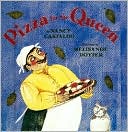
Pizza for the Queen.
2005.
Holiday House.
Guided Reading Level: L
Review copy borrowed from local library.


Based upon a true story, Pizza for the Queen shares the story of how Margherita Pizza came to be. Italian chef Raffaele Esposito, owner of Pietro e Basta Cosi pizzeria headed to work for a typical day. His typical day quickly turned atypical, as a request was made by Queen Margherita to try one of the pizzas that everyone is talking about. Raffaele sets out to make three of the most popular pizzas requested by customers. However, he's lacking the key ingredient to one of the three and therefore sets out to create a unique third pizza, that combines ingredients that match the colors of the Italian flag. The creation later became known as Pizza Margherita, gaining its name from none other than Queen Margherita and her love of the pizza creation.

Learning/Reading Activity:
  • Use this recipe and create Margherita Pizza for dinner one night. It will be a cultural experience of sorts for children and also educational, as they will have an understanding of how this particular pizza came to be!
Gemignani, Tony.
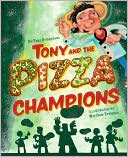
Tony and the Pizza Champions.
2009.
Chronicle Books.
Review copy borrowed from local library.


Tony Gemignani is actually a World Champion Pizza Tosser! This fictionalized account of the championship is sure to have kids drawn in from the get-go! Children will love learning about the World Championship team and their fancy moves that gained them the world title! The story is educational and very fun to read!

Learning/Reading Activities:
  • Head out to the local grocery store and pick up a ball of pizza dough - one for each member of the family. Watch this video about pizza dough tossing and then, the real kicker... give it a whirl in your own kitchen. See if you can toss the dough correctly and then take turns adding in your own special moves! Kids will love this activity!
Sturges, Philemon.
The Little Red Hen Makes a Pizza.
1999.
Dutton Children's Books.
Guided Reading Level: M
Review copy borrowed from local library.


In this take on the traditional version of The Little Red Hen, Philemon Sturges modernizes the tale by tackling a subject so many children are familiar (or at least interested) with - making a pizza. While the little red hen goes about making a pizza, he requests help from each of his friends, all of whom are too busy doing their own thing. However, when it comes time to sharing the pizza, they're all ready and willing - luckily, rather than being spiteful, the little red hen shares the pizza... and after enjoying the benefits of the pizza, all of little red hen's friends agree to help with the dishes!

I've always been a fan of The Little Red Hen, so I was very eager to include this in today's write-up! I hope you and your child(ren) find it as enjoyable it as much as I do!

Learning/Reading Activities:
  • Maggie Nuttall has created a wonderful teaching guide to use in collaboration with The Little Red Hen (Makes a Pizza). There are science, math and art activities, as well as comprehension questions and more! The packet can be found here.


If you're interested in finding out more information about any of the books reviewed or if you'd like to purchase the books, click the cover image for a link to Amazon.com. I am an Amazon Affiliate, so any purchases you make after clicking these images will result in my receiving a small percentage of the sale price!

Saturday, October 10, 2009

Columbus Day is Monday

This post was supposed to go up yesterday morning, but due to sickness, I couldn't get it typed up for you... so here it is today, still with plenty of time for "doing."

Columbus Day is Monday! And that means no school... but I guess since it's a National Holiday, we really should be sure kids understand the reason they have no school. Take some time out your day and share a book and activity about Christopher Columbus!
-The Teacher's Calendar, 2008-2009

Adler, David.
A Picture Book of Christopher Columbus.
1991.

Holiday House.

Guided Reading Level: M


Summary from Barnes & Noble:

A brief account of the life and accomplishments of Christopher Columbus.

I don't typically tend to be a fan of the "A Picture Book" series put out by David Adler. In the past, I've found the books, for lack of better term, boring. However, I must say that this book wasn't bad! I do think it does a great job of depicting the life of Christopher Columbus and his journey to the "new world." I definitely think it's worthy of use in educating children about this explorer!

Markle, Sandra.
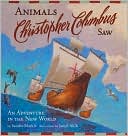
Animals Christopher Columbus Saw.
2008.
Chronicle Books.


Summary from Barnes & Noble:

In this new series by award-winning author Sandra Markle, famous explorers take a back seat to the animals they encountered along the way. While nothing about Christopher Columbus' journey was expected, he couldn't have imagined feasting on roasted lizard! Through nimble writing and beautiful paintings, this series casts the past in a whole new light!

This is a really creative book... and apparently it's part of a new series that I wasn't familiar with! The book is kind of sneaky because while teaching children about Columbus' journey to the "new world," they're also learning about animals (a topic I've discovered children have a love of).
UNDER ATTACK!
By the time the ships left the
Canary Islands, they were
probably already being attacked
by shipworms. Shipworms, also
called teredos, are really a kind
of clam that drills into wood
and eats the wooden bits their
drilling breaks loose. Over time,
shipworms can put enough holes
in a ship to sink it.
I think kids will be thrilled to learn all of this trivia of sorts, while also learning about a historical period in time! This is definitely a book I will consider adding to my library when I have a classroom of my own!

Sis, Peter.
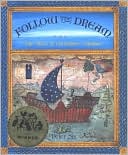
Follow the Dream: The Story of Christopher Columbus.
1991.
Alfred A. Knopf.


Summary from Barnes & Noble:

Christopher Columbus overcomes a number of obstacles to fulfill his dream of sailing west to find a new route to the Orient.

This is another wonderful picture book that accurately describes Christopher Columbus' time as an explorer. It was very resourceful and would likely be a welcome addition to any classroom library of resource books for different holidays (if you're anything like me, your collection is probably split: Halloween, Christmas, Easter, New Year's, Christopher Columbus, Science, Social Studies, etc)!

The Christopher Columbus Craft Activity, which could be purchased from Oriental Trading by the dozens, can be downloaded here and created just as easily from craft materials that you likely have right at home.

If you're interested in finding out more information about any of the books reviewed or if you'd like to purchase the books, click the cover image for a link to Amazon.com.

Tuesday, October 6, 2009

Jeanette Winter's Birthday

Jeanette Winter's birthday is today... and for those of you not familiar with her work, she puts out some awesome non-fiction picture books.
-The Teacher's Calendar, 2008-2009

Winter, Jeanette.
The Librarian of Basra.
2005.
Harcourt, Inc.

Guided Reading Level: L

Summary from Barnes & Noble:

A hopeful and inspiring true story about a librarian in Basra, Iraq.

Shhh! Don't tell anyone, but if I can round up some extra money, I might be using this book as a few Christmas presents this year! Yes, it's really that good! There's nothing like the story of a librarian who's books are threatened to show children just how worthy books can be! This story does just that! Definitely belongs on the shelves of all libraries (home, school and public)!

Lesson Plans/Reading Activities:
Winter, Jeanette.
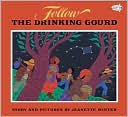
Follow the Drinking Gourd.
1988.
Alfred A. Knopf.
Guided Reading Level: M

Summary from Barnes & Noble:

By following the directions in a song, "The Drinking Gourd," taught them by an old sailor named Peg Leg Joe, runaway slaves journey north along the Underground Railroad to freedom in Canada.

This book is certainly very informational in teaching children about the Underground Railroad. The true story walks children through the journeys taken by slaves looking to free themselves. While providing children with very historical, accurate information, this book also has great power because it's one of those stories that will make them feel as they aren't "really" learning, while a whole lot of learning is actually taking place!

Lesson Plans/Reading Activities:
If you're interested in finding out more information about any of the books reviewed or if you'd like to purchase the books, click the cover image for a link to Amazon.com.

Sunday, September 27, 2009

Banned Book #2: The Library Dragon

Deedy, Carmen.
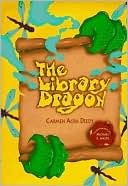
The Library Dragon.
1994.
Peachtree Publishers
Guided Reading Level: M


Summary from Barnes & Noble:

Miss Lotta Scales is a dragon who believes her job is to protect the school's library books from the children, but when she finally realizes that books are meant to be read, the dragon turns into Miss Lotty, librarian and storyteller.

Reason(s) for Banning:
My Thoughts:

I raved about this book on an earlier post. Below, you will find my review!

Uh-oh! There's a new librarian at Sunrise Elementary - Miss Lotta Scales. Let's just say Miss Lotta Scales really does have lots of scales, she's a dragon! She takes her job too seriously though, thinking she's there to protect the books from the students and ends up turning the whole school anti-library. However, one daring little girl enters the library unknowingly and Miss Lotta Scales finally realizes what the library is really there for - to provide students with pleasure in reading! At the end of the story Miss Lotta Scales turns from the Library Dragon to Miss Lotty, the librarian and storyteller. This was an incredible story! There's even a Library Dragon Flip Doll to complement the story!
I don't see any reason for banning the book from public or school libraries. If anything, this book will instill in children an appreciation for caring for other people's property and books! I find no reason as to why this book would be banned... the use of fire is not being used in a negative way!

Your Job - Share your thoughts on the following topics on this post!
  • Should the book be on the banned book list?
  • Is it okay to be found on a library or book store shelf?
  • How would you share this book with your child/children?
  • If you are not familiar with the book, based on my post and the discussion of others, would you consider allowing your child to read/be read this book? Why? Why not?
If you're interested in finding out more information about any of the books reviewed or if you'd like to purchase the books, click the cover image for a link to Amazon.com.

Thursday, September 24, 2009

National Punctuation Day

Celebrated on September 24, National Punctuation Day is a celebration of the lowly comma, the correctly used quote and other proper uses of periods, semicolons and the every-mysterious ellipsis. Visit www.nationalpunctuationday.com for more information.
-The Teacher's Calendar, 2008-2009

From my own experience in the classroom as a substitute teacher, many children struggle with the correct use of punctuation on a near daily basis. As teachers, perhaps this means we need to find a new approach to the teaching of such content. Could children's literature be helpful in the correct usage of punctuation? Have any of you used children's literature to teach punctuation? Was it's use successful in teaching what you were hoping to accomplish?

Donohue, Moira Rose.
Alfie the Apostrophe.
2006.
Albert Whitman.
Guided Reading Level: N

Summary from Amazon:

Alfie and other quirky little figures represent the contestants in the punctuation-mark talent show: periods and hyphens, commas, asterisks, and parentheses. They all do their things, including telling jokes and riddles (question marks) and cheerleading (exclamation points). Alfie, who has butterflies about performing onstage, does magic tricks, turning two words into contractions and demonstrating the use of the possessive. He brings down the house and is declared the show's shining star. Fanciful cartoon drawings capture the whimsy of this original, instructional story. However, children may miss some of the laughs, and, indeed, the point of the grammar lesson, if they haven't already been introduced to punctuation marks.–Sally R. Dow, Ossining Public Library, NY (School Library Journal).


This is a great book to introduce the apostrophe! It shows "magic" happening as two words are combined into a new word - a contraction! Definitely a great book to use in a classroom, and even if not being used, it's a great "thought" for teachers who are looking to introduce contractions in a clever, creative way that will really help children remember what an apostrophe does.

Pulver, Robin.
Punctuation Takes a Vacation.
2003.
Holiday House, Inc.
Guided Reading Level: M


Summary from Barnes & Noble:

When all the punctuation marks in Mr. Wright's class decide to take a vacation, the students discover just how difficult life can be without them.

This is an AWESOME book! I so want to add this to my collection! The enthusiasm for punctuation in this book is evident... I can definitely see the book exciting students about writing and editing. I loved it so much, I created two activities to go along, one riddle and one editing activity for students, feel free to download!

Worksheets I Created to Pair with the Book:
Truss, Lynn.
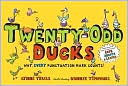
Twenty-Odd Ducks: Why, Every Punctuation Mark Counts!
2008.
Penguin Group USA.


Summary from Barnes & Noble:

Commas and apostrophes aren't the only punctuation marks that can cause big trouble if they're put in the wrong place. Now, Truss and Timmons put hyphens, parentheses, quotation marks, periods, and more in the spotlight, showing how which marks you choose and where you put them can cause hilarious mix-ups.

So this book is really clever! It has the potential to really make children chuckle... however, it either has to be used during independent reading, so children can see the placement of punctuation and relate to the pictures to tell the difference between the sentences with different punctuation marks, or it has to be read aloud by a teacher who is very good at fluctuating his/her voice in order to ensure that the correct meaning is conveyed! Perhaps the best way to use this book in a classroom would be to "borrow" a few of the sentences and put them on the board to make a discussion about just how much punctuation has the ability to change the entire meaning of a sentence.

If you're interested in finding out more information about any of the books reviewed or if you'd like to purchase the books, click the cover image for a link to Amazon.com.

Monday, September 14, 2009

John Steptoe's Birthday

Today is John Steptoe's Birthday! Let's help him celebrate by reading some of his stories!

Steptoe, John.
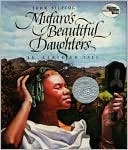
Mufaro's Beautiful Daughters.
1987.
Lothrop, Lee & Shepard Books.
Guided Reading Level: T


Summary from Barnes & Noble:

Mufaro was a happy man. Everyone agreed that his two daughters were very beautiful. Nyasha was kind and considerate as well as beautiful, but everyone — except Mufaro — knew that Manyara was selfish, badtempered, and spoiled. When the king decided to take a wife and invited "The Most Worthy and Beautiful Daughters in the Land" to appear before him, Mufaro declared proudly that only the king could choose between Nyasha and Manyara. Manyara, of course, didn't agree, and set out to make certain that she would be chosen.

This African "Cinderella" tale is definitely worth sharing! Children love to listen to stories that they can relate to another story they've heard and this book is perfect for that! Just like John Steptoe's other works, Mufaro's Beautiful Daughters teaches children a very valuable lesson, one that, in my family has always been relayed "You catch more flies with honey than with vinegar." That idiom is clearly and easily expressed in this wonderful book!


Steptoe, John.
Stevie.
1969.
Harper & Row, Publishers.
Guided Reading Level: M


Summary from Barnes & Noble:

An African-American child resents and then misses a little foster brother. One day my momma told me, "You know you're gonna have a little friend come stay with you." And I said, "Who is it?" and "For how long?" That's when Stevie moved in with his crybaby self. He played with my toys and broke them, and he left dirty footprints all over my bed. But then Stevie left again, and I missed him. I missed playing Cowboys and Indians on the stoop and watching cartoons in the morning. Maybe. . .just maybe, Stevie wasn't so bad after all.

This book was interesting... I wasn't sure what to expect when I initially checked it out of the library to use for this post! I love literature that teaches children a lesson. This book does just that! It really can teach children a powerful message - we don't appreciate our surroundings enough. You don't realize how much something means to you until you lose it. We need to find a way to appreciate what we have from the get-go! Maybe this book will be a start for instilling that important value in children!

Lesson Plans/Reading Activities
Steptoe, John.
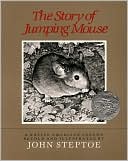
The Story of Jumping Mouse.
1984.
Lothrop, Lee & Shepard Books.
Guided Reading Level: P


Summary from Barnes & Noble:

"You will reach the far-off land if you keep hope alive within you." The words of Magic Frog give courage to the young mouse on his long and perilous journey to reach the wonderful land of legend. He faces many obstacles on his quest and sacrifices much to help others in need. But the mouse's compassion and faith in himself prove to be a source of great power...and bring him rewards even beyond his dreams.


Wow... now this was a good book! I can see many ways in which this book would be useful in everyday life, as well as a part of the classroom.
  1. Character Education - Diligence/Perseverance - Children will quickly see that they can accomplish what they wish, as long as they keep working towards that goal - they will be able to find a way to overcome the hardships to gain what they are looking for!
  2. Native American Legends - Here in NY, Native Americans is a big topic for the 4th grade Social Studies curriculum. This book would definitely be useful to include in the Native American unit, as it is one of just many Native American legends, which typically tend to be included in that unit.
  3. This book would also be appropriate for a family dealing with the loss of a loved one. Jumping Mouse eventually lands himself in "far-off land," which could, in the eyes of a religious family be equal to "heaven," as the passage below shows.
    The next morning Jumping Mouse woke up and crawled from his hole. "I am here," he said. "I feel the earth beneath my paws. I hear the wind rustling leaves on the trees. The sun warms my bones. All is not lost, but I"ll never be as I was. How will I ever manage?" Then Jumping Mouse began to cry.
    "Jumping Mouse," he heard a gavelly voice say.
    "Magic Frog, is that you?" Jumping Mouse asked, swallowing his tears.
    "Yes," said Magic Frog. "Don't cry, Jumping Mouse. Your unselfish spirit has brought you great hardship, but it is that same spirit of home and compassion that has brought you to the far-off land."
    "You have nothing to fear, Jumping Mouse."
    "Jump high, Jumping Mouse," commanded Magic Frog.
    Jumping Mouse did as he was told and jumped as high as he could. Then
    he felt the air lifting him higher still into the sky. He stretched out his paws in the sun and felt strangely powerful. To his joy he began to see the wondrous beauty of the world above and below and to smell the scent of earth and sky and living things.
    "Jumping Mouse," he heard Magic Frog call. "I give you a new name."
    "You are now called Eagle, and you will live in the far-off land forever."
    In that manner, this could be an extremely comforting book to children. It would allow them to understand that there is life after earth, that people (or animals) are looking down on them, and that even though someone isn't with you physically, they're always going to "be there" for you.
This is definitely a book worth sharing - in whatever manner you find appropriate for you children or students!

Lesson Plans/Reading Activities:
If you're interested in finding out more information about any of the books reviewed or if you'd like to purchase the books, click the cover image for a link to Amazon.com.

Tuesday, September 1, 2009

Jim Arnosky's Birthday

Jim Arnosky is an amazing author - that's all I can say to prepare you for the three following reviews!

Arnosky, Jim.
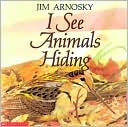
I See Animals Hiding.
1995.
Scholastic, Inc.
Guided Reading Level: M


Summary from Amazon:

Arnosky describes the ways animals in nature camouflage themselves to escape danger. He explains how protective coloration helps woodcocks, owls, and moths stay hidden; how seasonal changes in the fur of weasels and snowshoe hares aid in concealment; and how the body shapes of speckled trout, snakes, and bittern assist them in blending in with their environments.

This book is perfect for any science-loving child! The focus on camouflage as a means of protection makes this ideal for use in a science curriculum. Not only are the animals within camouflaged in their natural environments, Arnosky invites readers to try and locate different things/objects on each page... it's interactive all in itself!

Lesson Plans/Reading Activities/Suggested Reading:
Arnosky, Jim.
Every Autumn Comes the Bear.
1993.
G.P. Putnam's Sons
Guided Reading Level: H


Summary from Barnes & Noble:

Every autumn a bear shows up behind the farm, and goes through a series of routines before finding a den among the hilltop boulders where he sleeps all winter long.

This book is a perfect introduction to animals that hibernate. It doesn't go into any great detail, just shares with readers that bears go to sleep for the entire winter. I would use this book as a springboard to encourage children in thinking of how animals can sleep all winter long...

Lesson Plans/Reading Activities/Suggested Reading:
Arnosky, Jim.
Crinkleroot's Guide to Knowing Animal Habitats.
1997.
Aladdin Paperbacks.


Summary from Barnes & Noble:

Crinkleroot is an expert at finding animals because he knows where to look for them. In his jeep Crinkleroot covers a lot of ground, spotting over eighty different wildlife species in wetlands, woodlands, grasslands, drylands, and more. Along the way, readers will learn tips for finding wildlife in their own neck of the woods.

These books by Arnosky are so full of scientific information! I love them and will certainly be remembering them when I have my own classroom! I think your kids will love this one just as much as the first two - Crinkleroot takes readers on an educational journey without making it seem like reading/learning! Many kids need this, especially if they aren't comfortable with themselves as readers! Animal habitats is a topic that's likely to capture attention immediately - almost all kids love animals! Definitely check out this book in the Crinkleroot series!

Lesson Plans/Reading Activities/Suggested Reading:
If you're interested in finding out more information about any of the books reviewed or if you'd like to purchase the books, click the cover image for a link to Amazon.com.

Thursday, August 20, 2009

Jeff Brown's Birth Anniversary - 1926

Born Richard Chester Brown at New York, NY, this author worked as writer and editor in Hollywood and New York before becoming known for his book for beginning readers, Flat Stanley, published in 1964. Many sequels followed, including Stanley in Space, Invisible Stanley and Stanley and the Magic Lamp. His books have sold nearly a million copies. He died at New York, NY, on December 1, 2003.

Brown, Jeff.
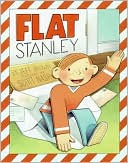
Flat Stanley.
2006 (1964).
HarperCollins Publishers.
Guided Reading Level: M

Summary from Barnes & Noble:

Meet Stanley Lambchop. He's an ordinary boy with an extraordinary problem. He's four feet tall, about a foot wide... oh, and half an inch thick. At first, being flat is fine. It's fun going in and out of rooms simply by sliding under the door. And it's exciting being mailed to your friends in California for a visit. But it's not always easy being different, and soon Stanley wishes he could be just like everybody else. Will he ever be normal again?

This book has been around for years... but my first experience with Flat Stanley did not actually come in reading this very first book in series, but rather the two newest books in the lastest series, Flat Stanley's Worldwide Adventures, written in Jeff Brown fashion! You can check out my raving posts here! In the mean time, you and your kids should definitely check out these books... they may just rank up there as some of my favorite books for kids (especially after discovering the activity below on another blogger's blog)!

Complete Flat Stanley book list:
Flat Stanley
Stanley and the Magic Lamp
Stanley, Flat Again
Stanley in Space
Stanley's Christmas Adventure
Invisible Stanley
Flat Stanley Magic
Flat Stanley's Worldwide Adventures #1: The Mount Rushmore Calamity
Flat Stanley's Worldwide Adventures #2: The Great Egyptian Grave Robbery
Flat Stanley's Worldwide Adventures #3: The Japanese Ninja Surprise
Flat Stanley's Worldwide Adventures #4: The Intrepid Canadian Expedition

And for teachers:
Flat Stanley Novel-Ties

***Learning Activities/Literature Tie-Ins***

A fellow blogger friend of mine, Gabby at The Work of Childhood, is getting set-up to start the Flat Stanley game. The details are as follows:

I was trying to figure out the best way to handle this for each of the kids to have their own Flat Stanley going around the U.S., and I think this is how it can work:
  • Each child decorates their own Flat Stanley to mail.
  • Prepare an envelope to mail, containing your Flat Stanley.
  • I will send out an address via email to each participant (making sure they are in separate states, etc).
  • Then, mail your Flat Stanley to your participant and wait for your friends Flat Stanley to arrive at YOUR house!
Once you receive a Flat Stanley, take him out with you where ever you go! Make sure to take pictures to email to the 'parent' of Flat Stanley. Instead of including journals, pictures, etc in the mail, we can conduct that via email and just let Stanley himself go around through the post offices ;)

Each Flat Stanley will spend a week at each participants house, so depending on how many participants we get, will determine how long it is until Flat Stanley returns home!

To join in on this AWESOME activity, head on over to Gabby's blog,
http://www.workofchildhood.com/2009/08/flat-stanley-wanna-play.html
or shoot her an email @ twocblog@gmail.com no later than Friday, August 28.

You can either join in on Gabby's fun at The Work of Childhood: Flat Stanley - Wanna Play?!

Or you can check out these independent activities:
If you're interested in finding out more information about any of the books reviewed or if you'd like to purchase the books, click the cover image for a link to Amazon.com.

Monday, August 17, 2009

31st Anniversary - Balloon Crossing of Atlantic Ocean

On August 17, 1978, three Americans - Maxie Anderson (44), Ben Abruzzo (48), and Larry Newman (31), all of Albuquerque, NM became the first people to complete a transatlantic trip in a balloon. Starting from Presque Isle, ME, on August 11, they traveled some 3,200 miles in 137 hour, 18 minutes, landing in Miserey, France (about 60 miles west of Paris) in their craft, named the Double Eagle II.
-The Teacher's Calendar, 2008-2009

I didn't find any books specifically targeted toward these three individuals or the particular flight mentioned... however, that being said, I did find some interesting books relating to hot air balloons. Unfortunately, only one of them actually arrived at the library in time for this review, but I'm going to pass along links for the others!

Van Leeuwen, Jean.
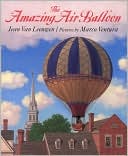
The Amazing Air Balloon.
2003.
Phyllis Fogelman Books.
Guided Reading Level: M

Summary from Barnes & Noble:

Long before the Wright brothers made their famous flight, a young boy from Baltimore became the first person ever to travel by air-in a hot-air balloon. One of the most exciting ways to fly, the air balloon was invented in 1783, although it would take another ten years before a balloon was built that was ready to carry human passengers. Aviation aficionados and indeed all readers will be fascinated by this time before airplanes when an ordinary boy experienced what seemed like an impossible dream-to fly.

This book was a really interesting read for a couple of different reasons!
  • I was glad to see an orphan depicted as the main character in the story who overcomes the oddities and is able to come out on top - being the one to take flight in the air balloon! You don't typically see orphans mentioned in children's literature and it would make for an interesting conversation with middle-grade readers to enable them to see how different the life of an orphan might be from their own!
  • The book also would be a great read for children who are interested in hot air balloons - obviously the balloons used in the late 70's were different than todays... children might enjoy discussing the differences and advancements that have been made over time.
Other Hot Air Balloon Books to Share:
Hot-Air Balloon Teaching Activities:
If you're interested in finding out more information about any of the books reviewed or if you'd like to purchase the books, click the cover image for a link to Amazon.com.

Friday, July 24, 2009

Amelia Earhart Birth Anniversary

Amelia Earhart, aviator, was born at Atchison, KS on July 24, 1897. She was the first woman to cross the Atlantic solo and fly solo across the Pacific from Hawaii to California. On July 2, 1937, she was lost in the Pacific Ocean on a flight from New Guinea to Howland Island.
-The Teacher's Calendar, 2008-2009

Adler, David.
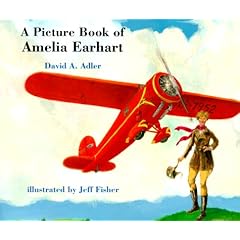
A Picture Book of Amelia Earhart.
1998.
Holiday House, Inc.
Guided Reading Level: M


Summary from Barnes & Noble:

Discusses the life of the pilot who was the first woman to cross the Atlantic by herself in a plane.

This book would be perfect for older elementary children who are studying biographies. Amelia Earhart's life is detailed to a perfect extent for children, making this the perfect selection for a unit on biographies or to be used when asking children to write a report on a famous person who had an impact on American history.

Ryan, Pam Munoz.
Amelia and Eleanor Go For A Ride.
1999.
Scholastic, Inc.
Guided Reading Level: P


Summary from Barnes & Noble:

While still dressed in evening gowns, Amelia Earhart and Eleanor Roosevelt go on a night flight above Washington, D.C. on April 1933. Extensively researched, the story contains actual dialogue and facts of the account. Breathtaking illustrations tell the trip of these two American heroines as it might have been.

I know from my past experiences in the classroom, that children have a hard time reading (and enjoying) literature about people from long ago who they can't really connect with. However, the way in which this story is written, children will likely be yearning to learn more about both Amelia Earhart and Eleanor Roosevelt! The friendship that is depicted between the two is one that children will really be able to relate to, as they both share a love of feeling independent and daring. This is most definitely worth sharing!

Lesson Plans/Reading Activities:
If you're interested in finding out more information about any of the books reviewed or if you'd like to purchase the books, click the cover image for a link to Amazon.com.

Monday, July 13, 2009

Non-Fiction Monday: National Ice Cream Month

First designated by President Ronald Reagan in 1984, July 1-31 celebrates ice cream as a fun and nutritious food that is enjoyed by a full 90 percent of the nation's population.
The Teacher's Calendar, 2008-2009
There are loads of ice cream related children's books on the market... today after reading more than a dozen, I've settled on these three non-fiction titles (after all, it is Non-Fiction Monday!) to share with you. If you're looking for more titles, fiction or non-fiction, drop a comment or an email my way and I'll gladly give you my list!

Greenstein, Elaine.
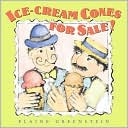
Ice-Cream Cones for Sale!
2003.
Scholastic, Inc.
Guided Reading Level: M


Summary from Barnes & Noble:

Who invented the ice cream cone? Ernst Hamwi, a wafflemaker at the 1904 St. Louis World's Fair, claimed it was his idea. But Arnold Fornachou said his cones inspired Ernst's! David Avayou reported that he brought the cone back from Paris. And Charles Menches announced that his sweetheart created the dessert. Only one man holds the patent for the first cone-making machine, though, and his claims top them all...In this picture book, Elaine Greenstein shows young readers that history is made by ordinary dreamers -- and it can be just as cool and delicious as a fresh cold ice cream cone.


This is a non-fiction book that's sure to appeal to children - as 99% of kids love ice cream! Greenstein walks readers through the patenting of the ice cream cone and the search for who the credit belongs to. A wealth of information is provided for readers... I enjoyed it because it's a summery treat we love eating and it's interesting to find out where the idea of ice cream cones came from!

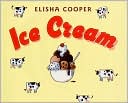
Cooper, Elisha.
Ice Cream.
2002.
HarperCollins Publishers.
Guided Reading Level: N


Summary from Barnes & Noble:

What some call a process, this observant author-artist calls pure poetry. And readers of all ages will, too, when they read and see (and almost taste!) Ice Cream—a picture book about how ice cream is made. It begins with the cow…and it takes farmers and milking machines, scientists and recipes, mixing thanks and giant freezers, even special ice cream tasters. But it all comes together in a symphony of sweetness…and don't forget the satisfied stomachs! Hooray for Elisha Cooper—and long may he wonder about, and observe and sketch, the world around us. Also includes a glossary of terms.

This book really walks readers step-by-step through the making of ice cream... from cow to ice cream delivery. I like how informative the book is, but I think it would be best used with older elementary children, perhaps ages 9+ because of the length and detail involved. Definitely worth sharing in the summertime when children are showing an interest in ice cream. I think this would be a good book to share after making homemade ice cream with children to show them how different the two processes are!

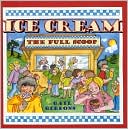
Gibbons, Gail.
Ice Cream: The Full Scoop.
2006.
Holiday House.


Summary from Barnes & Noble:

Everybody screams for ice cream! And it certainly has come a long way from its humble beginnings as a mere snow, milk, and rice mixture. Gail Gibbons explains the many firsts in ice cream history, from the first ice cream crank to the first waffle cone, as well as interesting facts about the tasty dessert, including how ice cream is made and how it gets to your home.


Like Gail Gibbons other works, this book appealed to me because of the variety of ways in which it can be used - for a simple story, read the bigger text at the bottom of the page that flows as a story. For children who are showing more of an interest in the little details that are involved in the making of ice cream, Gibbons has once again added in the details throughout the illustrations. This book provides so much information, it's definitely worth sharing!

If you're interested in finding out more information about any of the books reviewed or if you'd like to purchase the books, click the cover image for a link to Amazon.com.

Thursday, July 9, 2009

Patricia Polacco's Birthday

Happy Birthday to Patricia Polacco. Prior to having started this blog, I wasn't familiar with very many of her works... however, I've discovered just how much she has to offer, and she's quickly becoming one of my favorite authors!

Polacco, Patricia.
Just Plain Fancy.
1990.
Bantam Little Rooster Books.
Guided Reading Level: O


Summary from Barnes & Noble:
Naomi Vlecke lives with her farming family in an Amish community in Pennsylvania. The Amish first came to Pennsylvania in the early 1700s, and to this day preserve a religious and "plain" life-style. As part of her household chores, Naomi looks after the chickens with her little sister, Ruth. While her elders have impressed upon her the importance of adhering to the simple ways of her people, Naomi is horrified when one of her hen eggs hatches into an extremely fancy bird.
I have always been intrigued by the Amish... and to have a children's book of this proportion devoted to teaching children a small bit about the Amish lifestyle... well, let's just say everyone should read, if not own this book! I could see this book being used educationally in two ways...
  1. Before a trip to an Amish country (Lancaster County, PA, Berlin or Holmes County, OH or many others) to educate the children on the different lifestyles they will be seeing.
  2. As one book in a theme on many focused on cultural difference among children growing up within the United States.
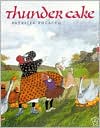
Polacco, Patricia.
Thunder Cake.
1990.
Philomel Books.
Guided Reading Level: M


Summary from Barnes & Noble:
When the air gets heavy and dark clouds drift low over the fields of Grandma's farm, her frightened granddaughter hides under the bed. But Grandma insists that this is Thunder Cake baking weather and the two are soon scrambling to gather the ingredients to make the cake--and get it into the oven before the storm arrives.
This book would be perfect for the summer we're having so far, here in NY... lots of thunderstorms! What's cool about it is that is shows that by keeping busy, you can distract yourself from something you're afraid of! And... not only that, but you can actually make a Thunder Cake of your own after reading this, for the recipe is provided for readers at the end of the story! I'd say it's definitely worth a read!

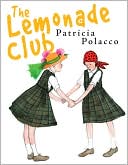
Polacco, Patricia.
The Lemonade Club.
2007.
Philomel Books.


Summary from Barnes & Noble:
Everyone loves Miss Wichelman's fifth-grade class-especially best friends Traci and Marilyn. That's where they learn that when life hands you lemons, make lemonade! They are having a great year until Traci begins to notice some changes in Marilyn. She's losing weight, and seems tired all the time. She has leukemia-and a tough road of chemotherapy ahead. It is not only Traci and Miss Wichelman who stand up for her, but in a surprising and unexpected turn, the whole fifth-grade class, who figures out a way to say we're with you. In true Polacco fashion, this book turns lemons into lemonade and celebrates amazing life itself.
This book is very moving... it tells the real story of Patricia's daughter Traci and her battle to overcome cancer. I would say the book is most appropriate for older children, 4th grade and up, as it touches on a very tender topic and from what I've seen, cancer seems to really scare and worry younger children. However, it's definitely worth the read... especially if one of the motto's you live by is "If life hands you lemons, make lemonade." That's exactly what the trio in this book does and it reminds me of my grandmother, as I quite often heard those exact words from her!

If you're interested in finding out more information about any of the books reviewed or if you'd like to purchase the books, click the cover image for a link to Amazon.com.

Monday, July 6, 2009

Cheryl Harness' Birthday

Born in Maywood, California on July 6, 1951, Cheryl Harness is a children's author who allows children to be time travelers as they read her books, sending them back in time to major events in the United States that have impacted life as it is today.

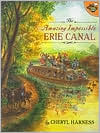
Harness, Cheryl.
The Amazing, Impossible Erie Canal.
1995.
Macmillan Books for Young Readers.
Guided Reading Level: M

Summary from Barnes & Noble:

When De Witt Clinton, a young politician, first dreams of building a canal to connect the Hudson River with the Great Lakes, folks don't believe such a thing can be done. But eight long years after the first shovelful of earth is dug, Clinton realizes his vision at last. The longest uninterrupted canal in history has been built, and it is now possible to travel by water from the American prairie all the way to Europe!

I've used this before in a 4th grade classroom and the kids really loved all the details that are pulled from the book... it's definitely the little things that they hang on to! This is a great read for anyone in the Great Lakes regions or for children who are learning about the history of the United States and the impact the past has on the present!

Harness, Cheryl.
They're Off!: The Story of the Pony Express.
1996.
Simon & Schuster Books for Young Readers.
Guided Reading Level: R


Summary from Barnes & Noble: In 1860, with North and South about to be divided by war, East and West were united through an extraordinary venture — the Pony Express. Over the course of ten days in April, eighty riders and five hundred horses delivered mail between California and Missouri — a mission that took three weeks by stagecoach.

This was a really interesting book and one on a topic that I wasn't at all familiar with... children will love it! There's a whole wealth of books relating to the Pony Express available that you could read alongside this one!
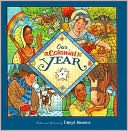
Harness, Cheryl.
Our Colonial Year.
2005.
Simon & Schuster Books for Young Readers.


Summary from Barnes & Noble:
In Colonial America there were no big grocery stores. No microwaves to serve up dinner piping hot. And no dishwashers for cleaning up. So what chores did colonial children do? From quilting bees and maple sugaring in the winter, to tilling the earth in spring, to harvesting an autumn feast, storyteller and historian Cheryl Harness tells a month-by-month story of a brand-new nation and the children in every city and farm whose hard work built America. Readers of all ages will delight in this vibrant folk art chronicle of one indelible nation way back when.
This would be a great read for children studying the 13 original colonies. I would probably use this book to have them compare life then and now!

If you're interested in finding out more information about any of the books reviewed or if you'd like to purchase the books, click the cover image for a link to Amazon.com.

Friday, June 19, 2009

Another Birthday...

Today is Elvira Woodruff's Birthday!

I've read several of Elvira Woodruff's books in the past and have reviewed one of his books here before. Elvira is a wonderful, wonderful author, who shares with readers stories that teach what I believe to be very valuable lessons. These 3 do nothing less!

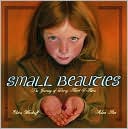
Woodruff, Elvira.
Small Beauties: The Journey of Darcy Heart O'Hara.
2006.
Alfred A. Knopf.


Darcy, the only girl in family of seven children has an ability that the rest of her family seems to lack - the ability to notice the "small beauties" in life - a dew-covered spiderweb, cloud castles, , a buttercup flower, a pebble shaped like a heart, a butterfly's wing. She's forever collecting these "small beauties" in the hem of her skirt, pulling a few stitches loose for each item.

We watch as Darcy continues to collect these objects while the family is experiencing the impact of the Great Potato Famine, which struck Ireland in mid-1800's. The O'Hara's try to overcome their loss of food and source of income by continually replanting their potato crops. However, their efforts just aren't enough and soon the family is facing eviction from their house if they don't pay the Crown's agent the rent. Unable to do so, the family has little else to do but sit and watch as the agent returns and torches the family home. Darcy quickly grabs one of Granny's rosary beads (the chain was broken upon falling on the floor). The next morning, before they prepare to set sail to America, Darcy grabs one last special stone from the ruins of what had, at one time, been her home and tucks it into the hem of her dress.

After a week in America, the O'Hara's gather to talk about their new life. Darcy contributes to the conversation by loosening the remaining stitches of her hem, allowing all of the "small beauties" to be released to the floor. Together, Darcy leads the family in a remembrance ceremony of sorts, allowing memories of their past life in Ireland. These "small beauties" that she was always distracted by allows the family the chance to share deeper memories of who they truly are and where they came from.

The message portrayed to readers in this book is perhaps one of the most important I've found in almost all of the books I have read to date... and, if for some reason, you happen to pass over the message, Elvira sums it up for you,
Author's Note: While Darcy and her family sprung from my imagination, the spark for their story came from my reading about a very real family who was forced to leave Ireland during the famine.
They left County Cork in 1847, sailing first to Canada and then on to America. Sadly, the mother of this family died aboard ship, but her children survived and settled with their father in Michigan. One son, William, went on to marry and have a son of his own called Henry.
This boy loved to tinker with the machines on the farm, and he grew up to become one of the forefathers of American industry. But his family's memories of fleeing the famine were very much a part of who Henry was, despite his success and fame.
Years later, he traveled to Ireland. A millionaire many times over, he could have afforded the most precious of gems - diamonds, rubies, and more. And yet what stone did he choose to ship back to America? A worthless old hearthstone removed from a humble cottage - worthless to some, but priceless to Henry Ford, for it was the very hearthstone that his father's family had gathered around the night before they were to leave Ireland forever.
Henry Ford, whose "horseless carriage," the automobile, changed the landscape of America, understood the importance of family memory. I hope you will too. And just as Darcy did, take the time to notice the small beauties you have all around you. For one day you may find that they are the very memories you treasure most.
Family Activities after sharing Small Beauties: The Journey of Darcy Heart O'Hara
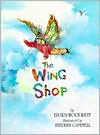
Woodruff, Elvira.
The Wing Shop.
1991.
Holiday House.
Guided Reading Level: M

Longing to return to his "old" house and "old" neighborhood, Matthew wishes for some method of transportation that would take him back to Main Street. He's not yet old enough to drive. He's too young to take a bus. And his mother will only let him walk to the drugstore (not far enough to get back to his house on Main Street). After watching a pigeon, Matthew realizes that a pair of wings would enable him to fly back to Main Street. His new friend, the pigeon, shows him just where to obtain a pair of wings - Featherman's Wing Shop!

Through the process of trying several different pairs of wings - seagull wings, bat wings, airplane wings... Matthew finally comes to the conclusion that "home" is where he and his family are together - it's not just a house or a neighborhood, but where family and memories are made... it can be virtually anywhere.

The Wing Shop is yet another wonderful story by Woodruff! The message here was simple for me to see, and would make this a wonderful book for children who are anxious about or having a hard time coping with a move to a new house/city.

Lesson Plans/Reading Activities:
  1. Look for "wings" on Craigslist, E-Bay or even Amazon.com - make a few purchases.
  2. Hang a few nails somewhere around the house (a basement, garage, playroom, etc).
  3. Each week, after children have completed their chores, "pay" them with a weekly "wing rental."
  4. Each day, encourage the children to be adventurous and with their wings, take a trip to someplace they're interested in (use the internet or non-fiction travel books for a "virtual" trip)!
  5. The scholastic website, linked above as "virtual," is a great activity for kids to keep them involved in learning, reading and writing throughout the summer months. Journaling topics are provided for each "trip" they take! A super cool activity if you ask me... one I'll definitely keep in mind for a classroom!
Wings:
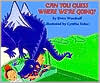
Woodruff, Elvira.
Can You Guess Where We're Going?
1998.
Holiday House.

This book reminds me so much of an activity my mom and dad used to do when my brothers and I were little... they'd take us on mystery trips... about 2 times a month in the summer. They were never "huge" trips - mini-golf, Great Escape, a water park, ice cream, swimming at a local swimming hole - that sort of thing, but it meant so much to us (obviously, as I still remember the "mystery trips" vividly)! They'd put us in the back seat of the car, blindfold us with an old bandanna and off we'd go... we'd have to guess where we were going and even if we guessed right, they wouldn't tell us... we'd find out once we reached our destination!

A young boy spends the day with his grandpa. As the two take of in the car, grandpa makes Jack guess continually where they're going after giving him hints... monkeys, dragons, mountains, knights in shining armor, sharks, turtles, t-rex. At last, they pull in to the parking lot... have you guessed where they're going? That's right... Grandpa took Jack on a trip to the library - where they check out books about all of these topics!

I think this is an incredible way to get children excited about reading... and even visiting the library. Plus, it's practically free (especially if you can walk or ride bikes to the library)! Definitely an activity to try out this summer! I bet it'll get the children reading!

If you're interested in finding out more information about any of the books reviewed or if you'd like to purchase the books, click the cover image for a link to Amazon.com.